How AI is Revolutionizing Personalized Anti-Aging Skincare
Introduction: The Mirror Just Got Smarter
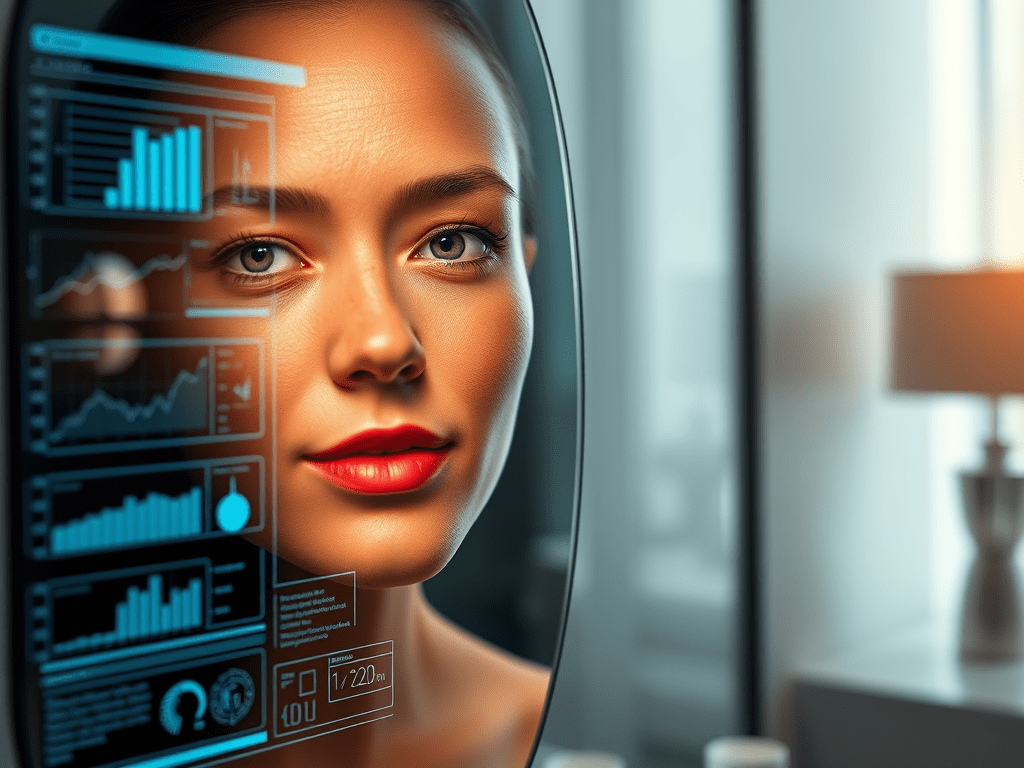
There’s a new kind of mirror — and it doesn’t reflect light. It reflects data. It doesn’t just show you what you look like. It tells you what your skin remembers, what it hides, and how it’s aging — or reversing.
Welcome to the future of anti-aging skincare, reimagined by artificial intelligence.
For decades, we’ve been sold dreams in glass jars. Creams, serums, and secrets. But they all shared one flaw: generalization. They treated every face as if it aged the same.
But your skin tells a different story.
- It responds to sleep, food, emotion, and light.
- It reacts to your hormones, your thoughts, your climate.
- It holds the memory of your years — and your days.
And AI? AI listens to that story. Then writes a better ending.
AI-powered skincare isn’t about robots applying moisturizer. It’s about hyper-personalized insights from photos, tone, lifestyle logs, and biofeedback. It’s about making skincare as dynamic and adaptive as your skin itself.
You upload a selfie. Or answer 10 prompts. Or sync your wearable. And what you get is not just a product. You get a ritual built for you.
Not your age group. Not your skin type. You.
Let’s explore how AI isn’t just changing skincare. It’s making your skin smarter.
H1: What Personalized Skincare Means in the Age of AI
🌸 TIP : Before using any AI tool, take a quiet moment to look at your skin in natural light and say something kind to it. Kindness is data, too — and your skin listens.
In the past, skincare was:
- “Dry, oily, or combination?”
- “Are you 20s, 30s, 40s?”
- “Try this 3-step routine.”
Today, with AI, skincare can be:
- “You’ve had 17% more sun exposure this week. Hydration should increase.”
- “You slept poorly 4 nights. Stress peptides are active. Let’s adjust texture.”
- “Your voice shows fatigue markers. Consider barrier repair.”
AI integrates data like:
- Facial scans (wrinkles, tone, pore size)
- Sleep and stress data (via wearable or prompt journal)
- Dietary input (sugar, caffeine, hydration)
- Environmental exposure (UV, pollution)
It then compares that to massive dermatological datasets. The result? A response system — not just a product.
It’s less “apply this.” More “support this process.”
H2: The Rise of the AI-Driven Skin Companion
🌿 TIP : Save screenshots of your skin scan results. When you stack them like journal entries, you begin to notice that progress isn’t just about glow — it’s about clarity.
Some of today’s most innovative skin tools are:
- Atolla (by Function of Beauty) – uses AI skin tests monthly to evolve your serum.
- L’Oréal Perso – a smart skincare dispenser trained on daily environmental data.
- Skinive – detects skin concerns from photos, even pre-mole risk.
- Revea – blends biology and AI to design skincare for your DNA.
These tools don’t replace dermatologists — they augment them. They give users agency, awareness, and early warning.
Imagine:
“You’re not breaking out. You’re inflamed from a week of sugar + poor sleep.”
That insight isn’t just helpful. It’s healing.
H3: How You Can Build AI Skincare Prompts That Sell
💡 TIP : Name your prompt like a poem — not a prescription. People don’t want “routine corrector v1.2.” They want “Glow Ritual” or “Morning Calm Companion.” Beauty begins in language.
If you’re a creator, coach, or wellness brand, here are product ideas you can launch:
💡 Glow Journal Prompt – Combine mood, diet, and mirror-check to track changes. 💡 Skincare Protocol Builder – Users answer 7 questions, and your prompt creates a 4-week skincare plan. 💡 Barrier Repair Tracker – Uses symptom input (tightness, flaking) to suggest layers and recovery steps. 💡 Seasonal Skin Shift Prompter – Adjusts routine based on humidity, temp, daylight. 💡 Selfie-to-Serum Prompt – Based on AI-analyzed selfie traits + ingredients bank.
These sell well on Gumroad and Notion. Bonus? They build trust.
20 Real Skincare Stories AI Helped Reframe
🌙 TIP: Not all stories need to be dramatic. Even a 1% shift — like feeling softer in your own skin — is worth documenting. Let small wins be your skincare love letters.
- Jin’s Stress Glow – Her face broke out every deadline week. AI linked cortisol spikes with sleep drops. She changed schedules.
- Mari’s Misdiagnosis – Thought she had dry skin. AI flagged sun exposure + harsh cleansers. Switched, cleared up.
- Dev’s Blue Light Toll – Late-night laptop work led to dull tone. AI prompted circadian syncing. Huge difference.
- Kira’s Night Cream Overload – Her pores were reacting, not aging. Prompt system simplified her layers.
- Avi’s Vegan Switch – Diet change led to breakouts. AI traced it to B12 and zinc dips.
- Nina’s Maskne Map – Acne was around the jaw only. AI suggested microbiome shifts, not acne meds.
- Leo’s Sleep Rings – Eye shadows weren’t aging, they were hydration signals. AI helped tweak night routine.
- Reema’s Texture Turns – Fine bumps came from protein overuse, not clogged pores. AI sorted it.
- Jon’s Beard Dullness – Tracked grooming and product buildup. AI suggested resets.
- Lani’s Summer Reaction – Rashes came from heat + vitamin C combo. AI flagged timing issues.
- Imani’s Inner Radiance – Tracked confidence scores with mirror logs. AI linked self-esteem days with skin glow.
- Tomo’s Teen Son – Used prompt tracker for his acne. Found dairy link. Empowered instead of shamed.
- Aria’s Hormonal Clock – Synced skincare with cycle. AI showed when to exfoliate vs. soothe.
- Cam’s Ocean Woes – Salt + sun dried him out. AI triggered ‘repair mode’ prompts.
- Lia’s Wedding Countdown – 3 months of data-backed prep led to skin confidence.
- Zane’s Winter Woes – AI adapted routine weekly for indoor heating.
- Elin’s Cleanser Clash – Breakouts weren’t hormonal. pH mismatch detected.
- Rafi’s Work Travel – AI adjusted for hotel air, climate change, and jet lag.
- Noor’s Texture Comeback – Used prompt to rebuild routine from scratch after skin burnout.
- Ezra’s Journal Prompt – Reflected on emotions and skin daily. AI found the real trigger: grief.
Action Checklist: 20 Ways to Activate AI Skincare Today
🌼 TIP from the : Add a reminder in your calendar every 28 days — the same rhythm as skin turnover. That’s your cue to reassess, not restart. Skin, like stories, needs rhythm more than reinvention.
- ( ) Upload your most recent selfie to an AI skin analyzer.
- ( ) Track your water intake for 7 days.
- ( ) Journal your mood and sleep nightly for 1 week.
- ( ) Use a wearable to monitor skin temperature changes.
- ( ) Run a blue light exposure test using screen time data.
- ( ) Identify your top 3 skincare concerns and write prompts about them.
- ( ) Pair your daily diet log with skin condition notes.
- ( ) Build a custom “Glow Score” tracker using Notion.
- ( ) Record one video a week to detect tone/mood correlation with skin.
- ( ) Create a seasonal skincare folder — one routine for each season.
- ( ) Design a 5-question AI prompt for skincare ritual detection.
- ( ) Experiment with AI-generated routine suggestions for 14 days.
- ( ) Share your AI prompt journey on social media with 1 image per week.
- ( ) Ask a friend to try your prompt and give feedback.
- ( ) Turn your top tip into a downloadable PDF with illustrations.
- ( ) Schedule a 30-minute reflection session on your AI skin insights.
- ( ) Integrate 1 biometric factor (sleep, hydration, HRV) into your prompt.
- ( ) Create a “Skincare Reset” prompt to use after travel or stress.
- ( ) Bundle your top 3 prompt ideas into a Gumroad product.
- ( ) Review and revise your skin prompt monthly based on results.
FAQ: Story-Based Answers
- Do I need to upload a photo? – Not always. Some prompts use journal-style input and still offer insight.
- What if I have sensitive skin? – Even better. AI tracks micro-reactions and adapts suggestions gently.
- Will this replace dermatologists? – No. But it may help you go to one with more clarity.
- Can it work for people of color? – Yes — many tools are trained across skin tones and needs.
- How often should I re-test? – Think seasonally or monthly. Skin is cyclical.
- What if I hate selfies? – Use wearable data, journal logs, or descriptive input.
- Can I track emotions too? – Absolutely. Skin and feelings are close cousins.
- Will it sell if I’m not a scientist? – Yes. Build with empathy, not jargon.
- What’s the most popular prompt type? – Self-diagnosis + ritual suggestions.
- Can AI recommend ingredients? – Yes. Based on texture, concern, and timing.
- Does this help with aging? – Yes, if you view aging as process, not problem.
- How do I start my own prompt product? – Use Notion, a clean PDF, or FlowGPT.
- Will people trust it? – They trust what helps. Prove it through clarity.
- What if results don’t show? – Adjust input or increase consistency. AI learns.
- Can men use this? – Please do. Skin has no gender.
- How do I teach this to clients? – Make them part of the discovery.
- What’s the ideal prompt length? – 5–7 structured questions + example result.
- Can I use AI art to visualize change? – Yes. Great for Instagram demos.
- Should I include disclaimers? – Yes. “Not a medical product.”
- Why does this matter? – Because confidence begins with clarity.
Conclusion: This Isn’t Skincare. It’s Skin Clarity.
AI doesn’t sell perfection. It offers perception.
To see your skin not as a flaw map or a clock…
But as a living archive of your life.
To respond, not react.
To adapt, not repeat.
To design skincare that evolves with you — not just treats you.
Creators: you’re not just making templates. You’re making mirrors that speak back.
That say: “I see you. Let’s care for that.”
And that?
That’s beauty with depth.
The Emotional Weight of Skincare
When we talk about skincare, we’re not just talking about texture, tone, or t-zone oil control. We’re talking about identity, visibility, aging, and sometimes — healing.
Your skin is often the first thing people notice, and sometimes the first thing you criticize. But it’s also where you laugh. Where you blush. Where you heal from sun, stress, and time.
AI, surprisingly, doesn’t come in with ego. It comes in with insight.
It doesn’t judge. It reflects.
It doesn’t recommend. It reveals.
And that’s why it’s quietly revolutionizing beauty from the inside out.
Long-Term Possibilities
AI in skincare is just getting started. In the future, we may see:
- Real-time skin biofeedback loops that adjust products mid-day
- Micro-dose AI serum mixers in-home
- Predictive AI that senses skin stress before it surfaces
- Emotion-skin maps that help therapists and dermatologists co-treat
It’s not just about your face — it’s about your pace.
How you move through life. How your body remembers it.
And how your skin is the storyteller of it all.
Creator Impact
If you’re reading this not just as a skincare lover but as a maker — know this:
Every prompt you write, every flowchart you build, every check-in tracker you design…
You’re not just selling digital products.
You’re teaching someone how to listen to themselves.
And that might be the most beautiful act of commerce in the world.
AI gives us the map. You — the creator — give us the way.
So build that ritual builder. Create the journal. Design the routine adjuster.
Someone out there isn’t looking for perfection — they’re looking to feel seen.
And when they feel seen, they glow.
🏷️ Tags: #AISkincare #PersonalizedBeauty #PromptDermatology #GlowTech. It offers perception.
To see your skin not as a flaw map or a clock…
But as a living archive of your life.
To respond, not react. To adapt, not repeat. To design skincare that evolves with you — not just treats you.
Creators: you’re not just making templates. You’re making mirrors that speak back.
That say: “I see you. Let’s care for that.”
And that? That’s beauty with depth.
🏷️ Tags: #AISkincare #PersonalizedBeauty #PromptDermatology #GlowTech
 Youth Routines