AI, Facial Bones & The Real Age Clock: Why Your Skull Is the Silent Timekeeper of Beauty
2. Introduction
Most people never even try to understand aging beneath the skin. They stretch the surface. Inject the filler. Smooth the wrinkle. But they never touch the architecture.
Why? Because it’s hidden. Because bone doesn’t bleed. Because when we think of youth, we picture glow—not gravity.
But the truth? Youth is structure. And structure is bone.
And here’s the shocker: your facial bones start deteriorating in your 30s. Not your skin. Not your fat. Your bone.
The jawline retreats. The orbit widens. The cheekbone collapses inward. Slowly, invisibly, inevitably.
And nobody talks about it.
This blog is a call to awareness. Not panic. To empower, not shame.
AI and regenerative science now allow us to see what once was hidden. And soon—by 2050—we may finally rebuild the facial bone itself: with stem cell scaffolding or 3D printed reconstruction.
But until then, the only anti-aging strategy with longevity? Bone preservation.
Let’s walk through this together—not as marketers of miracle creams, but as architects of truth.
You’re not aging at the surface. You’re aging at the frame.
3. What This Actually Means
Let’s break this down.
What is Facial Skeletal Aging?
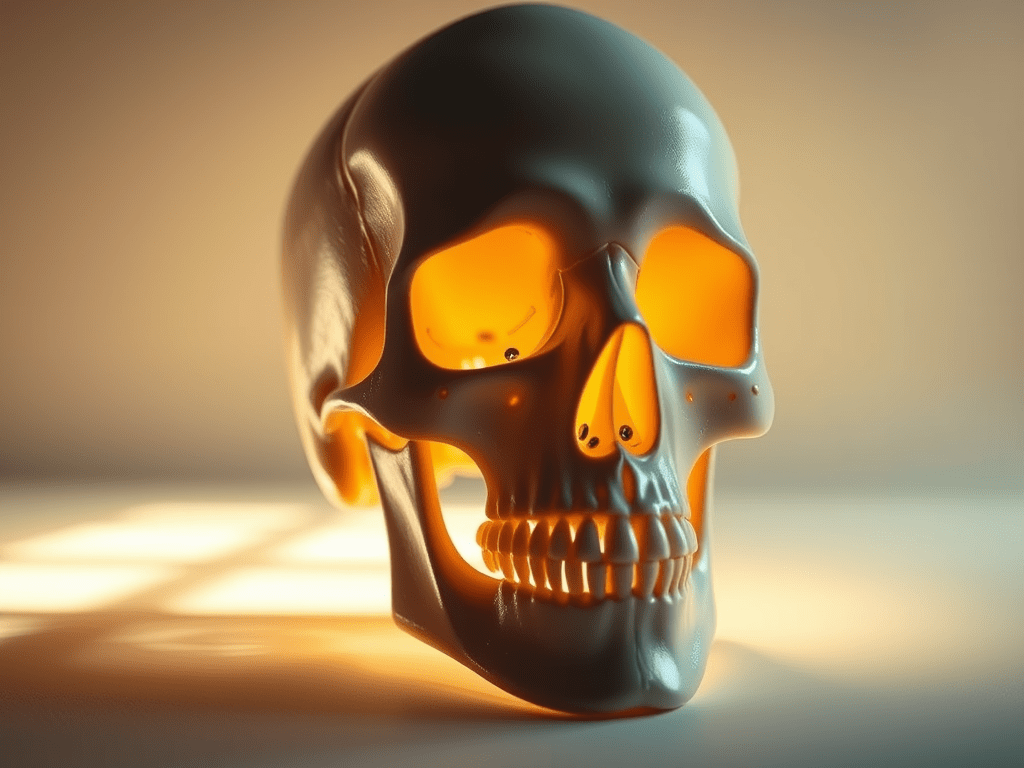
Facial aging isn’t just about skin sagging or volume loss. It’s about the underlying facial skeleton gradually resorbing over time.
Key bone zones affected:
- Maxilla: the upper jaw bone recedes, causing nasolabial folds to deepen.
- Mandible: jawbone shrinks backward and upward, reducing chin projection.
- Zygomatic arch: the cheekbone structure hollows, flattening the midface.
- Orbital rim: eye sockets widen, contributing to sunken eyes.
Result? The skin and soft tissue have less support, and even with fillers or lifts, youth can’t be restored fully unless the bone is addressed.
What Role Does AI Play?
- 3D facial scanning + AI modeling now tracks subtle bony changes over time.
- AI predicts age progression based on bone loss patterns.
- It powers simulations that forecast bone-based vs skin-based interventions, giving patients clarity.
Why Bone is the New Frontier
By 2050, AI-assisted diagnostics, stem-cell-based osteogenesis, and bio-printed scaffolds will make skeletal rejuvenation possible. Until then, protecting what you have is critical.
4. Step-by-Step: How to Protect Your Facial Bones (Right Now)
✅ 1. Ditch Skin-Only Thinking
Stop chasing surface treatments. Build from within.
✅ 2. Prioritize Nutrition for Bone Density
Calcium, vitamin D, vitamin K2, magnesium, collagen peptides, and omega-3s.
✅ 3. Reduce Facial Stress Habits
Teeth grinding, chronic tension, mouth breathing—all impact facial structure.
✅ 4. Practice Bone-Safe Movement
Load-bearing exercise. Chewing tougher foods. Facial yoga for bone stimulation.
✅ 5. Use Tech with Skeletal Awareness
If using AI apps to track aging, ensure they assess bone changes, not just wrinkles.
✅ 6. Educate Yourself
Understand the difference between volumization (fat/fillers) and structural preservation.
5. Secrets That Make It Work
🌟 Secret #1: The jaw is the foundation.
Protect your jaw health and alignment; it frames your lower face more than any cream can.
🌟 Secret #2: Collagen helps, but bones need minerals.
Don’t just drink collagen—fuel your osteoblasts.
🌟 Secret #3: AI tracking helps spot bone loss early.
Apps like FaceAI or MorphAge show shifts that are invisible to the naked eye.
🌟 Secret #4: Facial structure is rhythm.
Each person’s bone rhythm determines their unique expression. Losing bone isn’t just aging—it’s dissonance.
🌟 Secret #5: The future is bio-integration. In 2050, bone restoration will not be science fiction. AI will guide stem cell repair like a conductor leading a symphony.
Until then? Be the steward of your structure. Preserve the frame, and your beauty will echo with timeless resonance.
6. Real-Life Examples (EX1–EX20)
EX1: A yoga instructor in Portland discovered her cheekbones had subtly shifted in a decade through AI facial scans. Instead of panic, she built a blog sharing nutrient-dense meals and bone-boosting stretches.
EX2: A retired ballet dancer in Paris documented her facial structure post-menopause using 3D imaging, showing the relationship between posture, bone density, and elegance.
EX3: An engineer in Singapore used AI tracking apps for fun—until he noticed asymmetrical jaw recession. He now leads local workshops teaching young men about sleep posture and chewing techniques.
EX4: A mother in Mexico City noticed midface collapse in old photos. She started a community around ancestral diets and laughter therapy to preserve bone and joy.
EX5: A fashion model in Cape Town used AI to enhance her career—but offstage, it helped her track bone erosion. She created a YouTube series teaching teens about bone health beneath beauty.
EX6: In Seoul, a plastic surgeon began integrating bone-awareness education into every consultation, warning patients that treating skin without structure is like decorating a collapsing house.
EX7: A chef in Rome embraced bone broth not for trend but for her own mandible support after noticing nighttime clenching via smart pillow tech.
EX8: An AI researcher in Boston built his own algorithm to predict orbital widening. He never expected to become a TikTok educator about bone rhythms and aging.
EX9: A spiritual coach in Vancouver combined bone scans with affirmations about worth beyond appearance, founding the #FaceYourFrame movement.
EX10: A doula in Morocco encouraged new mothers to maintain their skeletal health postpartum—framing self-care as legacy preservation.
EX11: A wellness startup founder in Dubai now builds skincare lines informed by bone-safe ingredient philosophy.
EX12: A Gen Z creator from Osaka turned her own AI face-ageing results into a comic called “Bones Don’t Lie.” It went viral.
EX13: A dentist in Nairobi developed a facial protocol for patients who grind teeth, tying oral health to facial longevity.
EX14: In New York, a sculptor began studying the facial aging process as inspiration, then became a bone health advocate.
EX15: A trauma therapist in Berlin linked trauma patterns to jaw tension and worked with AI physiognomy to guide healing.
EX16: A university student in Istanbul organized a facial yoga club after learning how cheekbone collapse affects emotional expression.
EX17: A photographer in Sydney tracked long-term self-portraits, documenting bone evolution as art.
EX18: A TikTok creator from Rio blended tech, humor, and bone awareness into one-minute visual poems. Millions followed.
EX19: A woman in rural Canada recorded her own facial changes as part of an aging-with-honor podcast.
EX20: A bioprinting startup founder in Tel Aviv built a prototype to scan and map facial bone loss—hoping to 3D print its correction by 2030.
7. FAQ (Q1–Q20)
Q1: Why didn’t I know bones age before?
Because skin sells. A woman once spent thousands on creams until an AI scan showed her jaw was retreating. That day, she switched her investment—from serums to squats and sardines.
Q2: Is it too late if I’m already over 40?
Never. One man discovered facial yoga at 47. Within a year, not only had his face lifted subtly—but his self-image did too. His daughter joined him. Legacy began.
Q3: Are there AI tools that track bone changes accurately?
Yes. One startup in Helsinki offers micro-change simulations. A grandma used it just to “see,” but ended up changing her diet, posture, and purpose.
Q4: Will fillers or surgery stop bone loss?
No. One influencer tried every non-surgical lift. The transformation was temporary. Real change began when she supported her mandible health and stopped skipping meals.
Q5: Is facial bone loss just cosmetic?
No. One man noticed his bite changing. Turns out, jaw recession was causing both snoring and stress. Treating bone preserved beauty and breath.
Q6: Can lifestyle really change bone structure?
Yes. A hiker changed from smoothies to tougher foods. Her scans two years later showed retention in her maxilla. Resistance builds resilience.
Q7: I grind my teeth. Will that ruin my face?
It can. But one woman used tech pillows and mindful chewing to retrain her jaw. Her profile stabilized, and so did her sleep.
Q8: Are supplements necessary?
For some. One man reversed early-stage osteopenia with K2, D3, and magnesium. He called it “bone alchemy.”
Q9: Isn’t this just vanity?
No. One elder said, “My structure holds my story.” To honor form is to honor experience.
Q10: Will AI take over aging care?
Not take over. It will guide. Like GPS—it can’t walk your steps, but it shows the path.
Q11: Do men and women age differently in bone?
Yes. A female triathlete and her husband compared scans. His jaw widened, hers narrowed. Both adjusted nutrition.
Q12: Should I do facial yoga every day?
Not if it’s stressful. One artist paints while doing jaw stretches. Make it joy, not job.
Q13: Will smiling more prevent aging?
Partially. One researcher found that emotional expression correlates with muscle tone. Smiling is scaffolding.
Q14: I had orthodontics—did that help?
Sometimes. One teacher found that post-brace habits were key. She switched to nasal breathing and gained new harmony.
Q15: Can tech predict how I’ll age?
Partially. One app showed a 16-year-old her future face—then taught her to protect it.
Q16: What foods help bones most?
A nurse shared her sardine-hazelnut salad recipe. Bone in. Crunch on.
Q17: How do I deal with fear of facial change?
Turn fear into fascination. A dancer recorded weekly selfies—not to judge, but to witness.
Q18: Is cosmetic surgery bad if I know the risks?
Not at all. One woman did a lift but also strengthened her jaw through chewing protocol. Dual path.
Q19: Can I reverse changes once they begin?
You can slow, sometimes subtly restore. A boxer rebuilt cheek density post-injury through load and diet.
Q20: Where do I even begin?
Here. With breath. With awareness. One moment, one bite, one posture at a time.
8. Action Check List (20 Items)
✅ Learn how to chew mindfully and practice at one meal per day. ( ) ✅ Scan your face with an AI tool and journal what you observe. ( ) ✅ Replace one soft meal with a crunchy, nutrient-dense alternative. ( ) ✅ Try one facial yoga exercise focused on the jawline. ( ) ✅ Interview your parents about their aging experience and bone health. ( ) ✅ Create a one-week food log and assess bone-friendly nutrients. ( ) ✅ Switch to nasal breathing for a full day and reflect on your energy. ( ) ✅ Design your own “bone health” daily ritual—however small. ( ) ✅ Share one fact you’ve learned about facial bones with a friend. ( ) ✅ Take a weekly portrait photo and start a visual log. ( ) ✅ Watch a documentary on structural aging and write a response. ( ) ✅ Try three different sleeping positions and track facial tension. ( ) ✅ Create a vision board of strong, aging-with-honor faces. ( ) ✅ Start a conversation on social media about aging with depth. ( ) ✅ Visit a museum and reflect on bone structure in art. ( ) ✅ Try making bone broth from scratch—or plant-based equivalent. ( ) ✅ Sketch your face from memory and compare over time. ( ) ✅ Take one deep breath every hour as a reset. ( ) ✅ Write a letter to your 70-year-old self, thanking them. ( ) ✅ Say your real age out loud—and smile. ( )
9. Conclusion
Aging is not the enemy. It’s the mirror. And our bones—the silent scaffolds of our identity—are the most honest reflection.
For centuries, aging was seen only as a skin-deep concern. Creams. Lifts. Filler. Filter. But beneath the glow or sag lies structure. And when structure shifts, everything changes.
Here’s the truth: AI is no longer a far-off future. It’s a present force, capable of mapping the erosion of facial bones, predicting changes that no mirror can see. This is a call not to fear—but to foresight.
As early as your 30s, subtle bone loss begins. Your jawline softens. Your cheekbones hollow. Your orbital rim expands. It’s not about being vain. It’s about being aware.
And the future? By 2040 to 2050, we may see widespread use of:
- Stem cell injections that rebuild bone mass in the face
- 3D bio-printed scaffolds customized by facial scans
- AI-coordinated bone growth simulations for medical and aesthetic goals
- Genetic treatments that slow skeletal aging at the epigenetic level
But we’re not there yet. And in the meantime, here’s what you can do:
1. Change the language of aging. Start seeing structure, not just surface.
2. Preserve what matters most. Bones hold your expression. Your identity. Your humanity.
3. Educate others. Talk about bone health in beauty spaces. Share articles, videos, and studies.
4. Practice structural habits. Chew harder. Posture taller. Move more. Breathe better.
5. Hold compassion for change. Every wrinkle, every shift is a part of the story. You can honor it, and still care for the form.
This is not just about beauty. It’s about connection—to your past, your strength, your future self.
Remember: you are not eroding. You are evolving. Preserve the frame, and your light will always shine through.
You are not alone. You are not too late. You are building a new era of aging—graceful, informed, and deeply human.
You are the architect.
10. Legal Notice & Tags
Legal Notice: This blog is for educational and informational purposes only. The information provided is based on current scientific understanding, personal research, and anecdotal evidence. This content does not replace medical consultation. Always consult a licensed professional for personalized advice. Any mention of AI tools or facial scanning technology is for reference only and does not imply endorsement.
Tags: AI aging, facial bone loss, beauty science, anti-aging structure, 3D bone printing, stem cell rejuvenation, jawline health, AI facial scan, real aging, biohacking face, bone density, collagen nutrition, skull aging, longevity beauty, ethical aesthetics
11. Author’s Commentary – 20 Tips
Tip1 Love your face not for how it looks—but for what it holds.
Tip2 Beauty fades when bone fades. Care for it early.
Tip3 Every bite builds or breaks. Choose to chew wisely.
Tip4 Posture isn’t just pride—it’s preservation.
Tip5 Your profile tells a story. Listen to its shape.
Tip6 Smile lines aren’t enemies. They’re echoes of joy.
Tip7 AI is your mirror—use it to observe, not obsess.
Tip8 Supplements help—but rhythm heals. Eat with presence.
Tip9 One breath of alignment each morning shifts everything.
Tip10 Don’t fear selfies. Use them to document your becoming.
Tip11 Beauty is not fixed—it’s fluid, like the seasons.
Tip12 Teach your children that bone is worth more than likes.
Tip13 Rest restores more than sleep. It realigns the soul.
Tip14 Hydration isn’t only for skin—bone needs it too.
Tip15 Let food be dense, not dull. Feed the marrow.
Tip16 Chew gratitude with your meals. It strengthens everything.
Tip17 Don’t outsource aging. Be your own sculptor.
Tip18 Track change like weather—not with fear, but curiosity.
Tip19 Accept today’s frame—and shape tomorrow’s.
Tip20 If you forget all else: structure before shine.
12. Interaction Layer
💬 We’d love to hear from you:
What part of facial aging do you wish you knew earlier? Do you think AI has helped or hurt our self-awareness?
👉 Comment below:
“How do you feel about bone-based aging? Would you ever scan your face to learn the truth?”
Let’s learn and age together—mindfully, beautifully, boldly.
13. Meta Description (SEO Optimized)
Explore how facial bones—not skin—reveal your real age. Learn how AI, stem cells, and nutrition can help preserve your skeletal structure. Discover tips, examples, and expert insights on preserving jawline, cheekbones, and facial shape over time. Best bone-health practices, AI facial scan tools, real aging signs, anti-aging for millennials and Gen Z, structural beauty tips, collagen and calcium nutrition, AI in beauty tech, skull aging awareness. Perfect for those seeking deeper anti-aging science, ethical aesthetics, and future-forward longevity planning.
 Youth Routines