
AI Says You Can’t Anti-Age on Food Alone: Why Supplements Are No Longer Optional
Introduction
Let’s get real. You’re eating clean. Organic kale. Grass-fed beef. Fresh fruits, steamed veggies, ancient grains. Maybe even juicing in the mornings and drinking herbal teas at night.
And yet… You’re tired. Your skin’s not glowing. Your focus is foggy. You wonder: “Isn’t this supposed to work?”
Here’s the harsh truth most people don’t want to say out loud: Food isn’t enough anymore. Not in 2025. Not for real cellular-level anti-aging.
But wait—why does that sound so radical? Because we’ve been sold the myth that if you “just eat right,” your body will have everything it needs. That may have been true decades ago, but we’re not living in the same soil, same seasons, or same stress levels.
This blog isn’t an ad for supplements. It’s a wake-up call. A deeply researched, emotionally honest, AI-assisted exploration into why modern nutrition can’t keep up with what our bodies demand to stay biologically youthful—and what we can actually do about it.
Let’s break this taboo. Let’s admit what we know in our gut: it’s time to go beyond the plate.
What This Actually Means
Anti-aging is no longer a buzzword—it’s a biological strategy. But it only works if your body has the full toolkit it needs.
And here’s the thing: food, even the “healthiest” food, is now missing critical nutrients due to:
- Soil depletion (less magnesium, zinc, selenium, etc.)
- Modern farming (faster growth = lower nutrient density)
- Shipping and storage losses (vitamins degrade over time)
- Cooking losses (heat-sensitive compounds destroyed)
- Stress and pollution (higher antioxidant demands)
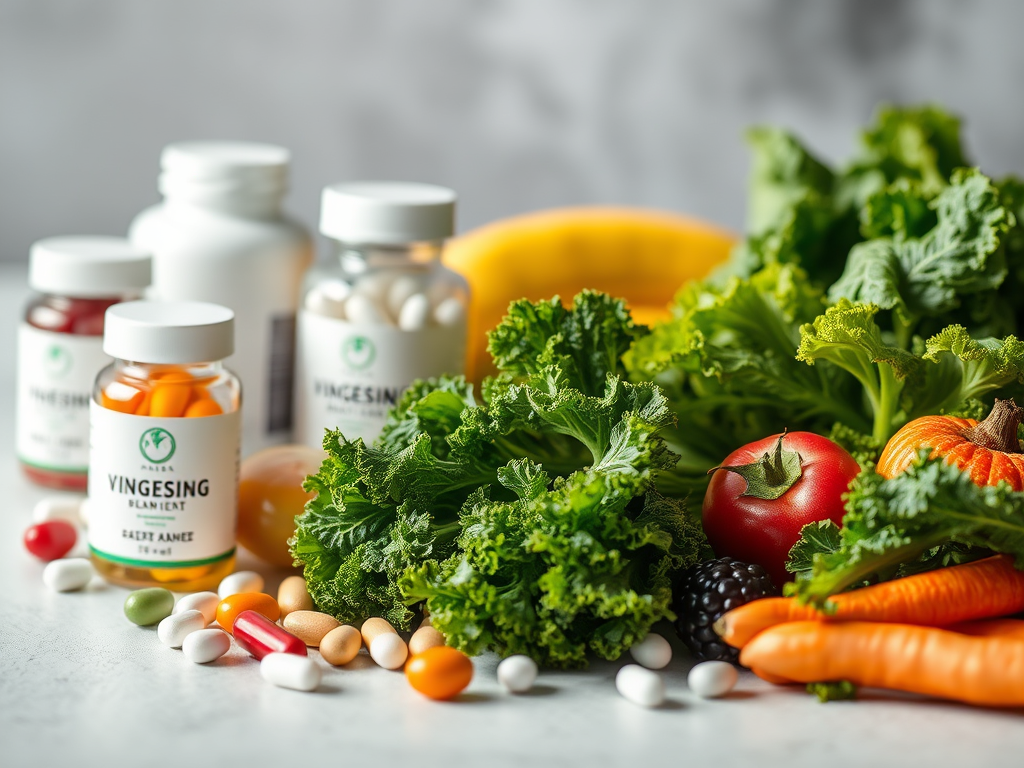
So when we talk about supplements, we’re not talking about “extra.” We’re talking about essential restoratives. The missing puzzle pieces.
To anti-age effectively, your cells need:
- Mitochondrial support (CoQ10, PQQ)
- DNA repair co-factors (NMN, resveratrol)
- Antioxidant defense (Vitamin C, E, Glutathione)
- Cognitive protection (Lion’s Mane, Omega-3s)
- Hormonal balance (Magnesium, Zinc, Ashwagandha)
And no—you can’t eat enough spinach to match these.
✅ Step-by-Step Guide to Supplement-Enhanced Anti-Aging
Step 1: Accept the Landscape Has Changed
Forget old advice. Acknowledge the new reality: today’s food is not yesterday’s food.
Step 2: Start with Lab Work
Know your baselines. Order micronutrient panels. Hormone profiles. Inflammation markers.
Step 3: Build Your Core Stack
Choose foundational supplements:
- Multivitamin (with bioavailable forms)
- Omega-3s
- Magnesium (glycinate or threonate)
- Vitamin D + K2
- Probiotics or postbiotics
Step 4: Target Your Needs
Add based on goals:
- Longevity: NMN, spermidine, resveratrol
- Energy: CoQ10, B-complex, Rhodiola
- Skin: Collagen peptides, hyaluronic acid
Step 5: Cycle + Adjust
Supplements aren’t forever. Cycle them. Track your response. Tune dosages.
Step 6: Quality Over Hype
Research brands. Use 3rd party-tested, non-synthetic, clinically dosed products.
Step 7: Track Progress Holistically
Journals, apps, blood work, skin scans. Measure how you feel, think, move, glow.
Secrets That Make It Work
- Timing Matters — Some compounds need to be taken with food, others on an empty stomach.
- Synergy > Quantity — For example, Vitamin D works best with magnesium and K2. Pair smartly.
- Less Is More — It’s not about how many pills. It’s about how wisely they’re chosen.
- Consistency Wins — Anti-aging is not instant. Think decades, not days.
- Listen to Your Body — Biofeedback > blind routines. Supplements should make you feel better, not worse.
- Stack Wisely — Group by goal (energy AM, calm PM). Don’t mix too many adaptogens at once.
- Stay Curious — New research comes fast. Stay educated. Stay empowered.
6. Real-Life Examples
EX1 — Emma, a 42-year-old copywriter in Toronto, felt her focus slipping despite eating clean. After adding magnesium threonate and omega-3s to her morning routine, her mental clarity rebounded—and so did her writing flow.
EX2 — Leo, a fitness coach in Cape Town, discovered his fatigue wasn’t from overtraining, but a B12 deficiency. A simple sublingual supplement restored his energy in two weeks.
EX3 — Aisha, a yoga teacher in Bali, always ate local and organic. But her hormonal acne persisted. After introducing zinc and DIM, her skin cleared and her cycle stabilized.
EX4 — Martin, a software engineer in Stockholm, used NMN and CoQ10 after a stressful year. Within a month, he said his “biological battery” felt recharged.
EX5 — Chloe, a high school teacher in Melbourne, dealt with brain fog. A personalized stack—B-complex, lion’s mane, and vitamin D—gave her back her teaching spark.
EX6 — Jun, an artist in Seoul, added collagen and hyaluronic acid for joint pain. The bonus? Radiant skin and pain-free painting sessions.
EX7 — Camila, a 60-year-old writer in Lisbon, started spermidine and noticed sharper memory and deeper sleep within three weeks.
EX8 — Thomas, a remote worker in Austin, used ashwagandha to manage stress. He describes it as “emotional insulation for modern life.”
EX9 — Leila, a designer in Marrakech, cycled adaptogens with seasons—rhodiola in winter, holy basil in summer—and felt balanced year-round.
EX10 — Elias, a retiree in Athens, began taking resveratrol and noticed better blood pressure and renewed stamina on his morning walks.
EX11 — Freya, a new mom in Dublin, took magnesium glycinate for postpartum anxiety. It became her “calm anchor.”
EX12 — Omar, a chef in Dubai, introduced probiotics to improve digestion after years of gut discomfort. Within a month, his body felt lighter.
EX13 — Nadia, a singer in New York, took NAC and vitamin C to support vocal recovery. Her voice regained its sparkle.
EX14 — Raj, a startup founder in Bangalore, added L-theanine for sharper focus in high-stress sprints.
EX15 — Sofía, a gardener in Buenos Aires, used vitamin K2 and D3 for bone strength. “I feel sturdier digging and lifting,” she said.
EX16 — Viktor, a gamer in Moscow, took lion’s mane and reported clearer recall and faster reaction times.
EX17 — Elina, a dancer in Paris, used collagen and MSM for recovery. “I can leap longer and land softer,” she smiled.
EX18 — Matteo, a bartender in Naples, struggled with night shifts. Melatonin and magnesium gave him restorative rest.
EX19 — Aya, a student in Tokyo, took B-complex during exams. Her focus sessions lasted longer than ever before.
EX20 — Gabriel, a climber in Santiago, used cordyceps for stamina at altitude. “It’s like breathing younger,” he said.
7. FAQ
Q1 — What if I have no idea where to start? That’s totally okay. Most people begin unsure. The key is one: one symptom, one supplement, one week. Notice how your body reacts. It’s like learning a new language—your body speaks, you listen.
Q2 — How do I know which supplement is right for me? Start by identifying your biggest struggle—sleep, energy, focus. Then match it with a well-known support nutrient. Pair that with research and maybe one small lab test. Think “targeted curiosity.”
Q3 — Can I really trust online supplement brands? Not all of them. Look for third-party testing, transparency in sourcing, and proper dosing. Join communities that review products honestly. Reputation matters more than packaging.
Q4 — What if I feel worse after starting something? Pause immediately. Your body’s feedback is sacred. Some ingredients don’t suit everyone. Less is more, and response beats routine every time.
Q5 — Isn’t it better to get nutrients naturally? In an ideal world—yes. But farming practices, stress, and lifestyle demands have changed. Supplements today aren’t “extra,” they’re essential corrections.
Q6 — Should I get tested first? Absolutely, if you can. Baseline labs remove guesswork and save money in the long run. Even a basic panel can reveal a lot.
Q7 — Is it bad to take too many? Yes. Over-supplementing can stress the liver or throw systems off balance. Start low, go slow. Track everything.
Q8 — Will I need them forever? Not always. Many supplements can be cycled. Once the body stabilizes, you can often reduce or pause.
Q9 — What’s the best time to take supplements? Depends. Energy boosters in the morning. Calming aids in the evening. Fat-soluble vitamins with meals. Always check instructions.
Q10 — How do I measure if it’s working? Mood, sleep, skin, energy, focus—track these. Keep a 30-day log. If you feel more you, it’s working.
Q11 — What if I forget to take them? Don’t stress. Supplements aren’t all-or-nothing. Aim for consistency, not perfection.
Q12 — Can supplements fix my diet? No. They support it. Think of food as the soil and supplements as the sunshine. Both matter.
Q13 — Are there risks to combining too many? Yes, especially with herbs and high-dose vitamins. Some interactions cancel benefits or cause discomfort. Research every new addition.
Q14 — Can I mix brands? Yes, but keep notes. Pay attention to overlap. Balance convenience with caution.
Q15 — Is expensive always better? Not always. Some high-end brands offer purity. But many overpriced products are just marketing. Read the label.
Q16 — How do I explain this to my doctor? Come prepared. Share your goals. Show labels. Many doctors appreciate patients who are informed and proactive.
Q17 — Should I take breaks? Yes. Just like exercise, your body benefits from rest cycles. Try one week off every few months.
Q18 — How do I avoid overwhelm? Simplify. Pick 3 core needs. Build around those. Everything else can wait.
Q19 — Can kids take supplements? Only under guidance. Children’s needs are unique. Pediatric-approved formulas only.
Q20 — What if nothing seems to help? It happens. Don’t quit—refine. Your body is trying to tell you something deeper. Keep asking, keep listening.
8. Action Check List ✅
- Pick one supplement today to research deeply. ( )
- Start a 30-day wellness journal to track effects. ( )
- Get your first nutrient lab panel. ( )
- Talk to one health-conscious friend about your plan. ( )
- Join a wellness forum or Discord. ( )
- Test your vitamin D levels this week. ( )
- Switch one synthetic supplement to whole-food based. ( )
- Try a magnesium bath for sleep. ( )
- Create a morning or evening stack. ( )
- Ask your doctor about testing homocysteine. ( )
- Add one adaptogen to your routine. ( )
- Read a clinical study on your chosen supplement. ( )
- Take one tech-free walk after your morning dose. ( )
- Watch how your skin changes in 2 weeks. ( )
- Remove one unnecessary item from your stack. ( )
- Batch organize your supplements in a daily case. ( )
- Try a tincture instead of capsules. ( )
- Test your baseline energy at 3pm daily. ( )
- Share your progress in a post or journal. ( )
- Celebrate small wins—like one night of deep sleep. ( )
9. Conclusion: This Isn’t a Trend—It’s the Turning Point
Here’s where we get honest—really honest.
We’re entering a time when taking care of yourself is no longer as simple as “eating clean” or “going to bed early.” In this age of environmental stress, digital fatigue, polluted air, ultra-processed food, and low-nutrient crops, what used to be enough… no longer is.
And while that might sound discouraging, it’s actually a call to greater agency. To evolve with the world rather than fall behind it. To understand that anti-aging isn’t vanity—it’s biological self-respect.
Let’s stop pretending spinach will save us from burnout. Let’s stop shaming ourselves when food isn’t enough. Let’s upgrade the conversation.
Because food is the foundation. But supplements?
They’re the reinforcements.
🔮 What the Future Holds
- Bio-personalized supplement stacks tailored to your genes and microbiome.
- AI-powered nutrient tracking synced with wearable tech.
- Nano-encapsulated delivery systems for higher absorption.
- Daily age biomarkers checked like a step counter.
- Emotional health supplements integrated into physical routines.
The direction is clear: precision + prevention.
But to be ready, we need to:
- Take ownership of our daily inputs.
- Stop waiting for fatigue, wrinkles, and forgetfulness to “go away.”
- Be proactive instead of reactive.
- Invest in our well-being like we invest in our phones, careers, or cars.
This doesn’t mean popping 40 pills a day. It means becoming fluent in your biology. Learning to listen. To respond. To repair.
❤️ Let’s Talk Human to Human
You are not broken. You’re not weak because food isn’t fixing everything. You’re not shallow for wanting to look and feel youthful.
You are aware. You are evolving. You are ahead of the curve.
Supplements aren’t a cheat code—they’re an adaptation. A loving one.
So here’s the truth: If you start—even just with one capsule, one habit, one change—you’re rewriting your story. You’re investing in the most important startup in your life: your body, your clarity, your peace.
And if that makes you “different”… then good. Because the future won’t be built by people who do nothing. It’ll be shaped by people like you— Who choose knowledge. Who act with care. Who dare to say: “I want more from this life, and I’m not afraid to go get it.”
You’ve got this.
Even if it’s messy.
Even if it’s slow.
You are your best project. And you’re worth the upgrade.
10. LEGAL + TAG
Legal Disclaimer: This blog is for informational purposes only and not a substitute for professional medical advice. Always consult a healthcare provider before starting any supplement regimen.
Tags: anti-aging, food vs supplements, supplement guide 2025, health optimization, cellular repair, longevity tools, wellness biohacking, nutritional gaps, functional medicine, adaptogens, mitochondrial health, youth strategy, modern nutrition, AI health advice
11. Author’s Tips for Real-Life Application
Tip1 Start small. One supplement at a time.
Tip2 Your body is wiser than marketing. Listen to how you feel.
Tip3 Journal the changes. What improves? What doesn’t?
Tip4 Quality over quantity. One high-quality product > five cheap ones.
Tip5 Don’t forget hydration. No supplement works without it.
Tip6 Gut health is step zero. Heal it before stacking.
Tip7 Track sleep. It’s your best anti-aging tool.
Tip8 Learn your “energy dip” times. Support them smartly.
Tip9 Cycle adaptogens. Use them as seasonal allies.
Tip10 Stay consistent. It’s the only way to know what truly works.
Tip11 Don’t chase hype. Chase what’s backed by your labs.
Tip12 If it’s not working after 90 days, re-evaluate.
Tip13 Some things are subtle. Trust slow progress.
Tip14 Mental clarity is a sign you’re on track.
Tip15 Surround yourself with people who value health.
Tip16 Simplify your stack every 6 months. Let it breathe.
Tip17 Your skin often tells the truth before your labs do.
Tip18 Honor your biology—not trends.
Tip19 Rest is regenerative. Honor your cycles.
Tip20 Keep going. Even if it’s messy. Especially then.
12. Interaction Layer
We want to hear from you.
Have you tried using supplements to fill the nutritional gaps modern food can’t reach?
👇 What changed for you?
Which supplement shifted your energy or mindset?
Drop your thoughts in the comments. Let’s build a smarter, kinder wellness world—together.
13. Meta Description + SEO Keywords
Meta Description:
Discover why anti-aging isn’t possible with food alone anymore. This in-depth, AI-assisted guide reveals the truth about modern nutrition, critical deficiencies, and how supplements complete the puzzle. Includes tips, strategies, and real-world encouragement.
SEO Keywords: anti-aging supplements, food vs supplements, why food isn’t enough, how to supplement smart, health biohacking 2025, nutrition tips AI, supplement plan for anti-aging, daily stack for wellness, mitochondrial support, DNA repair nutrients, best supplements for longevity, why modern food fails, nutrient loss in 2025, functional health optimization
 Youth Routines