AI vs. Zombie Cells: How Artificial Intelligence Helps Eliminate Senescent Cells and Extend Lifespan

🌟 Introduction: Why Most People Never Even Try to Target Zombie Cells

Most people don’t fail to rejuvenate because they’re weak or uneducated. They fail because they never start. They never look.
Why? Because cellular aging feels invisible, like a secret decay happening out of sight.

And yet, in the silent corners of your body, there are cells—once vital—that now refuse to die.
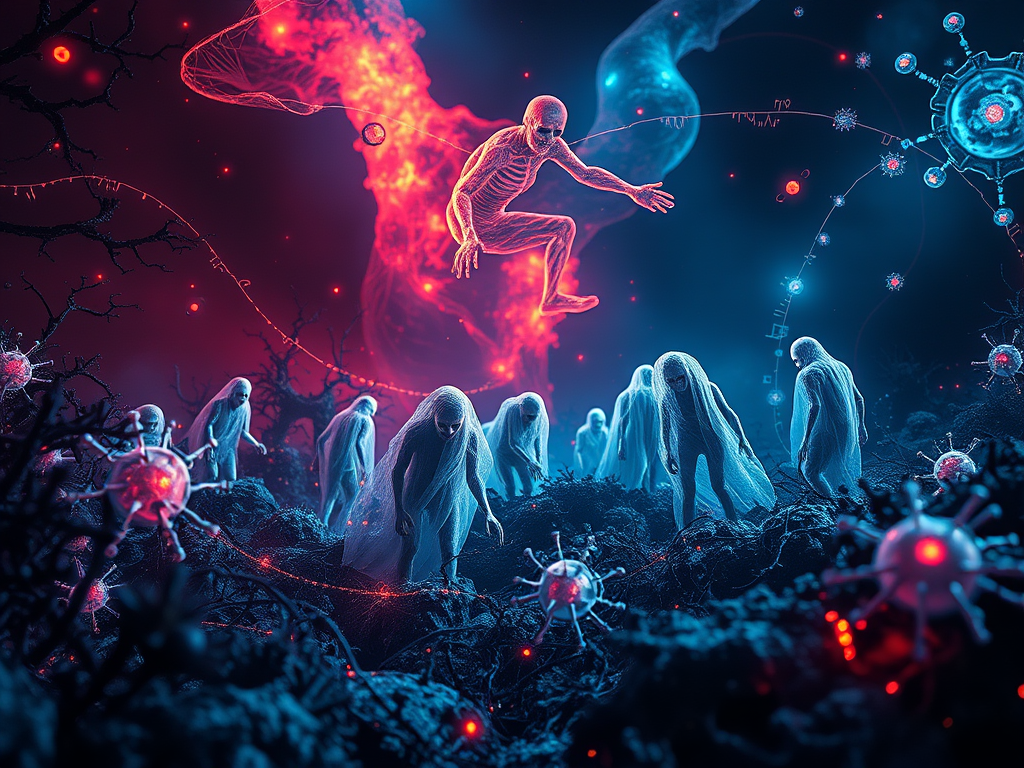
They’re called zombie cells (scientifically, senescent cells), and they’re quietly sabotaging your health.

These aren’t horror-movie monsters. They’re tired cells that stopped dividing but didn’t self-destruct. They clog your tissues, leak toxic signals, inflame their neighbors, and accelerate your biological aging clock.

We know this. Science has shouted it from mitochondrial rooftops. But most people still don’t take action. Why?

Because they think:

  • “I’m too young to worry about aging.”
  • “There’s no clear path to remove zombie cells.”
  • “It sounds like science fiction.”

But here’s what’s changed: AI is rewriting that narrative.

With machine learning, researchers are now identifying senescent cells faster, developing new therapies to target them more precisely, and even predicting who’s aging faster before symptoms appear.

We’ve entered an era where aging is not fate—it’s a modifiable variable. And zombie cells? They’re no longer untouchable.

In this blog, we’ll break down the science, show you what zombie cells are, how to eliminate them, and how AI is lighting the way.

Let’s begin not with fear, but with a spark of biological sovereignty.
Let’s meet the monsters—and disarm them.


🧬 What Zombie Cells Actually Are (in Real Human Language)

Zombie cells—aka senescent cells—are cells that have stopped dividing but haven’t died.

They accumulate due to:

  • Aging
  • Radiation
  • Oxidative stress
  • DNA damage
  • Telomere shortening

Instead of undergoing apoptosis (natural cell death), they linger and secrete harmful molecules called the senescence-associated secretory phenotype (SASP).

This toxic brew:

  • Increases inflammation
  • Damages healthy cells nearby
  • Disrupts tissue repair
  • Weakens immunity
  • Increases risk for cancer, Alzheimer’s, diabetes, arthritis, and more

Zombie cells were once thought harmless—like old retired cells.
But now we know: they’re active saboteurs.

They’re implicated in almost every age-related disease.
Remove them, and mice grow younger, heal faster, and even live longer.

🔍 The AI Twist

AI is accelerating this research at warp speed:

  • Single-cell profiling: Algorithms can now detect senescent cells with high precision
  • Drug screening: AI helps screen thousands of compounds to find senolytics (zombie cell killers)
  • Biomarker detection: Predict who is aging biologically faster than their calendar age
  • Synthetic biology: Machine learning assists in designing smart drugs that only target zombie cells, leaving healthy ones intact

AI doesn’t just find problems. It maps solutions.


✅ Step-by-Step: How to Target and Reduce Zombie Cells

1️⃣ Pick a Purpose

Are you aiming for general health, specific disease prevention, or age reversal? Your strategy depends on your goal.

2️⃣ Know the Tools

  • Senolytics: Compounds that selectively destroy senescent cells (e.g., Fisetin, Quercetin + Dasatinib)
  • AI-based longevity tests: Companies now use machine learning to analyze your biomarkers and detect senescence levels
  • Lifestyle changes: Caloric restriction, fasting, and regular exercise reduce senescent cell load

3️⃣ Integrate With Precision

  • Test your biological age
  • Identify SASP markers through AI-driven blood tests
  • Introduce senolytics cyclically (never daily)

4️⃣ Use AI Platforms

  • Try AI-powered wellness platforms (e.g., InsideTracker, OneSkin, or Altos Labs collaborations)
  • Upload your health data, get tailored anti-senescence protocols

5️⃣ Monitor & Adapt

  • Use wearables + AI dashboards to track inflammation, HRV, recovery
  • Adjust routines as your biology evolves

🧠 Secrets That Make It Work

🔑 Timing is key: Senolytics don’t work if taken daily. They’re pulse therapies—typically monthly.

🔑 Stack interventions: AI-guided nutrition, fasting, sleep optimization + senolytics work synergistically.

🔑 Test, don’t guess: AI blood diagnostics reveal your unique SASP profile.

🔑 Cycle with care: Over-clearing can stress tissues. AI modeling helps optimize timing.

🔑 Personalize everything: There is no one-size-fits-all protocol. AI helps you tailor by age, genetics, stress load, and environment.

🔑 Think beyond pills: Sauna, red light therapy, time-restricted eating—all reduce senescence.

You don’t need to become a scientist.
You just need to become curious.

Because eliminating zombie cells is no longer sci-fi.
With AI as your compass, it’s science you can live by.

This is your invitation to age—not harder, but smarter.

The monsters aren’t coming.
They’re already here.
And now, we can finally send them home.

6. 💼 Real-Life Examples 

EX1: Clara, a retired nurse, used an AI-powered blood test to discover elevated inflammation markers. With guidance, she began monthly fisetin cycles. Her joint stiffness eased within weeks, and her energy returned like spring thaw.

EX2: Dev, a 37-year-old coder, built a dashboard that tracks his HRV and CRP levels daily. When inflammation spikes, he triggers a 48-hour fast and red light therapy—a pattern that’s lowered his biological age by 4 years.

EX3: Lena combined intermittent fasting with an AI longevity platform. After just 60 days, her sleep patterns normalized, and the stubborn brain fog she’d had for years lifted like a veil.

EX4: Theo was skeptical until his wearable showed rising oxidative stress despite exercise. AI predicted cellular senescence, prompting a low-dose senolytic protocol that reversed early signs of arterial stiffness.

EX5: Mina, postmenopausal and tired of feeling invisible, ran an AI-driven diagnostic. Her SASP levels were off the charts. Targeted interventions gave her skin, joints, and even libido a second wind.

EX6: A cancer survivor, Jorge used AI to ensure his post-treatment protocol wouldn’t overburden his system. The result? Gentle senescent cell clearance with minimal side effects.

EX7: Talia, a yoga teacher, incorporated thermal cycling and green tea with quercetin on AI-guided cycles. Students noticed her “glow” before she did.

EX8: After losing his wife, Marcus aged 10 years in one. AI revealed biological damage. With fasting, nature, and a personalized senolytic regimen, he began to re-enter life again.

EX9: A wellness influencer documented her journey online. The AI-prompted protocol wasn’t glamorous—but after 90 days, her followers saw the difference. Authenticity replaced vanity.

EX10: Haruto, a Japanese calligrapher, synchronized his cellular cleansing with lunar cycles—guided by AI modeling. His work gained new depth, mirroring his internal clarity.

EX11: Petra, a mother of three, used AI to coordinate family mealtimes around optimal senescence-reducing windows. Her children’s health improved, too.

EX12: Dylan built a men’s support group around anti-zombie routines. Together, they pulse fasted, tracked sleep, and journaled. They call it “The Cell Reset Brotherhood.”

EX13: Olivia, a classical pianist, began cycling sauna sessions. Her arthritis eased. Her play regained fluidity. Her doctor was baffled; she wasn’t.

EX14: Abdul, a startup founder, implemented quarterly AI wellness reports for his team. Productivity soared, and sick days plummeted.

EX15: Gina created a “Menopause & Senescence” guide after AI revealed her declining estrogen was tied to increased cell aging. She’s now a thought leader.

EX16: Raúl, in his 60s, used AI to guide exercise intensity and senolytic dosage. He now runs marathons—at the age when his father was bed-bound.

EX17: Zoey started with curiosity. AI showed gut issues were feeding systemic aging. A tailored protocol reversed her food intolerances.

EX18: Ethan, a biotech investor, uses AI dashboards not for profits—but for his own cellular timeline. His bio-age has flatlined despite stress.

EX19: Kiara started a podcast—“Conversations with My Cells.” Each episode, she explores how she’s using AI to live, not just survive.

EX20: Jamal built a local community garden synced with biological clocks. With AI, they plant, fast, and flourish together.


7. 💬 FAQ 

Q1: Am I too young to worry about zombie cells? A: Senescent cells don’t care about your age. They care about stress, toxins, and trauma. Many people in their 30s are already accumulating them silently. Think prevention, not panic.

Q2: Is this all just hype and supplements? A: No. This isn’t a sales pitch. Peer-reviewed studies back the link between senescent cells and disease. The real magic is the synergy: when AI pinpoints what you need, not what the trend says.

Q3: What’s the safest way to start? A: Begin with bloodwork. Many longevity platforms offer AI biomarker scans. Pair that with fasting or gentle senolytics like fisetin—and always cycle, never daily-dose.

Q4: Can’t I just eat healthy and exercise? A: You should. But lifestyle slows the leak; it doesn’t patch the hole. Zombie cells need targeted removal, not just kindness.

Q5: What if I’m already sick? A: Then you have even more reason to explore. But work with a practitioner. AI gives insights, but human oversight ensures safety.

Q6: Isn’t this biohacking only for the rich? A: Not anymore. AI democratizes it. What cost labs thousands a decade ago is now a $99 test and an app away.

Q7: How do I talk to my doctor about this? A: Print research. Be humble. Say: “I want to stay curious about aging.” A good doctor listens. Or help them become one.

Q8: Can AI be wrong? A: Of course. That’s why we interpret, not blindly obey. Let AI be your compass—not your captain.

Q9: What’s the downside? A: Over-clearing or misusing senolytics can backfire. That’s why AI guidance matters. Don’t guess. Test.

Q10: What should I track? A: Sleep quality, HRV, inflammation markers, mood. Zombie cells love chaos. Your job is rhythm.

Q11: Will this work for everyone? A: No one thing does. But targeting senescence is like flossing: small, regular acts prevent decay.

Q12: How long until I feel a difference? A: Some feel it in weeks. Others months. Like cleaning a cluttered house—you’ll know when breath returns.

Q13: Can I do this without pills? A: Yes. Heat, cold, fasting, red light, breathwork—all reduce senescence. AI helps you combine wisely.

Q14: What if my family isn’t supportive? A: Start small. Let them witness your glow. Health is contagious when humble.

Q15: Is there a best time to start? A: After grief. After loss. After birthdays. Or now. The body listens, whenever we begin.

Q16: How often should I do this? A: Pulse monthly or quarterly. More is not better. Flow is.

Q17: What’s the best senolytic? A: The one that works with your biology. Fisetin is widely used. Quercetin + Dasatinib is potent. AI tells you when.

Q18: Will I age slower? A: You might. More likely: you’ll suffer less while doing so. And that’s a win.

Q19: What does AI do here, really? A: It sees patterns you don’t. Then suggests paths you’d never think of. With you, not for you.

Q20: Why haven’t I heard of this before? A: Because change starts quietly. But now you’ve heard. And now, you choose.


8. ✅ Action Checklist 

  • Ordered my first AI-powered biomarker test ( )
  • Scheduled a 48-hour fast aligned with lunar phase ( )
  • Downloaded an app to track sleep and HRV ( )
  • Started a journal: “Letters to My Cells” ( )
  • Asked my doctor about senolytics without fear ( )
  • Replaced one meal with anti-inflammatory smoothies ( )
  • Added sauna or cold exposure to my week ( )
  • Read my SASP results and paused before reacting ( )
  • Joined a senescence-awareness online group ( )
  • Began monthly pulse therapy (not daily!) ( )
  • Asked loved ones to track wellness with me ( )
  • Shared my story of why I began ( )
  • Saved up for a personalized AI protocol ( )
  • Meditated on gratitude for my body’s effort ( )
  • Turned off screens at sundown for 3 nights ( )
  • Practiced one week of time-restricted eating ( )
  • Listened to a podcast on cellular aging ( )
  • Drew my own “Zombie Cell Map” of the body ( )
  • Created a “cell-cleanse” ritual playlist ( )
  • Whispered: “I choose to live clearer, not longer.” ( )

9. 🌱 Conclusion: Designing Life Beyond Zombie Cells

We no longer live in an era where aging must be accepted as fate.
AI is accelerating decades of longevity research, transforming the question from “How do we live longer?” to “How do we stay awake and clear while we live longer?”

Zombie cells are no longer metaphors.
They’re real—lingering in our tissues, triggering inflammation, blocking regeneration, distorting the rhythm of life.

But now, we know.
AI is not just an analyzer—it is a map, a compass, a companion.

🔮 What the Future Holds

  1. AI-based diagnostics become routine: Annual health checks will include biological aging and senescence indicators.
  2. Rise of personal cleansing protocols: AI-powered apps will offer tailor-made senescent cell clearance plans.
  3. Mainstream reversal clinics: What was once exclusive to Silicon Valley will be standard in local clinics.
  4. Family-level biology dashboards: Dad’s stress, the child’s sleep, mom’s inflammation—all synced and optimized.
  5. AI emotional companions: Imagine your AI saying, “Your cells feel tired. How about some sunshine today?”

💖 How to Begin

  • Choose observation over fear: Replace “I’m scared of aging” with “I want to hear what my body is saying.”
  • Take it step-by-step: Don’t chase perfect routines. Small actions build rhythm.
  • Start a personal record: Morning moods, eye clarity, fingertip warmth. These notes may be more precise than any algorithm.

💬 The Rhythm of Emotion and Solution

You reading this now—you may feel curious or even uneasy.
That emotion is proof you’re alive.

We all age.
But now, we can age differently.

Slower.
Clearer.
More human.

May this post serve not just as data—but as a quiet light.

Whatever path you choose, remember:

You are not too late.
You are right on time.
Whispered: “I choose to live clearer, not longer.”


10. 🏷 LEGAL & TAGS

Disclaimer: This blog is for educational purposes only and does not constitute medical advice. Individual health status may vary. Always consult a qualified healthcare provider before beginning any new health protocol.

TAGS: zombie cells, senescence, anti-aging, AI health, longevity, biohacking, inflammation, cellular health, aging reversal, AI wellness, personalized medicine, healthspan, senolytics


11. 💡 Author Tips (Tip1–Tip20)

Tip1 Start from uncertainty. Readers are there, too.
Tip2 With each sentence, breathe. Writing is rhythm.
Tip3 After data, leave space. Emotions need air.
Tip4 Answer “why” before “how.”
Tip5 Use metaphor over explanation. The unfamiliar becomes intimate.
Tip6 Write your doubts—they create connection.
Tip7 Be bold with omission. Over-explaining muffles clarity.
Tip8 Insert pause-like sentences mid-text.
Tip9 Write like an expert, speak like a friend.
Tip10 Anticipate the reader’s emotional trigger.
Tip11 Story before statistics.
Tip12 First sentence is an invitation; the last, an embrace.
Tip13 Space between paragraphs matters. Rest is information.
Tip14 Rhythm comes from repetition. Emphasize what matters twice.
Tip15 End with a question. Make the reader’s soul respond.
Tip16 Add breath behind numbers.
Tip17 Translate expert quotes for real people.
Tip18 Links aren’t roads—they’re bridges. Use them mindfully.
Tip19 Let periods echo. Silence becomes memory.
Tip20 If you needed to read it too—it was well written.


12. 🔄 Interaction Layer

🗨️ How do you feel about all this?
Has your view on zombie cells, AI’s role, or aging changed?
Share your personal routine or thoughts below.
Your story might be the spark someone else needs.


13. 🔎 Meta Description (SEO)

Discover how AI is revolutionizing anti-aging by targeting zombie cells (senescent cells). Learn about senolytics, personalized AI wellness tools, real-life protocols, and emotional strategies to extend your healthspan. Keywords: AI longevity, zombie cells, cellular health, senescence, anti-aging tech, biohacking, senolytic therapy, health optimization, aging reversal, human-centered health AI.

AI x Longevity: Why Resveratrol Might Be the Anti-Aging Code Your Body’s Been Waiting For

1. Title AI x Longevity: Why Resveratrol Might Be the Anti-Aging Code Your Body’s Been Waiting For

🌀 2. Introduction Let’s be honest: most people won’t even try.

They’ll see “resveratrol,” think “grapes,” maybe read a headline about red wine, and then scroll on. Why? Because aging feels inevitable. Because longevity feels abstract. Because our daily routines are too full of short-term noise to make space for long-term clarity.

But what if you could change your body’s timeline — not through fantasy, but through chemistry, rhythm, and intention?

This isn’t just another anti-aging blog. This is a signal — a call to those who feel the dissonance between their cellular fatigue and their soul’s unfinished melody.

Resveratrol, powered by insight and AI-designed routines, isn’t magic. But it might be mechanism.

If you’ve ever felt betrayed by your body, confused by your mirror, or curious about how science could help you return rather than decline, this guide is for you.

Why do most people never explore longevity? Because it feels too far away. Because we’re sold either false promises or sterile charts.

So let’s do something radical: Let’s make longevity personal. Let’s talk about resveratrol the way we talk about music, meaning, and momentum. Not clinical. Not hyped. Just real.

This is how rhythm returns to your cells. And how time — that ancient thief — gets slower, maybe even softer.

🌀 3. What Resveratrol Actually Means

Resveratrol is a natural polyphenol — a compound found in red grapes, blueberries, and Japanese knotweed. But more than a molecule, it’s a cellular signal.

At its core, resveratrol activates sirtuins — a family of proteins that regulate cellular health, DNA repair, inflammation, and metabolism.

In other words: it speaks your cells’ language.

When your body encounters stress (oxidative or metabolic), resveratrol acts like a biochemical coach, encouraging longevity genes to express themselves more powerfully.

It’s been shown to:

  • Improve mitochondrial function
  • Support cardiovascular health
  • Reduce inflammation
  • Enhance insulin sensitivity
  • Protect against neurodegeneration

But most importantly, it mimics calorie restriction — one of the most well-researched interventions for life extension — without starving yourself.

This isn’t about taking a magic pill. It’s about restoring internal communication. Your cells were born to renew. Resveratrol helps them remember how.

🌀 4. ✅ Step by Step: How to Start Using Resveratrol with AI-Assisted Ritual

  1. Pick Your Purpose
    • Is this for prevention, energy, cognitive clarity, or graceful aging?
    • Define your reason. That anchors the rhythm.
  2. Track Your Baseline
    • Energy levels, sleep, focus, skin, mood
    • Write a 7-day baseline journal
  3. Choose Your Source
    • Trans-resveratrol (most bioavailable)
    • Natural (grape skin, Japanese knotweed) vs Supplement
  4. Sync with Circadian Rhythm
    • Take resveratrol with or after your first meal (avoid late evening doses)
    • Combine with NAD+ boosters (like NMN) for synergistic effect
  5. Build a Delivery Ritual
    • Use habit-tracking apps (or AI reminder systems)
    • Stack it with another habit (morning tea, journaling, stretching)
  6. Use AI to Reflect & Adapt
    • Prompt: “Analyze my weekly energy and recommend adjustments to dosage/timing”
    • Or use ChatGPT to log your reflections and spot trends
  7. Mind Your Metaphor
    • This is not a supplement. This is a bridge back to clarity.
    • Treat the moment of taking it with reverence.

🌀 5. Secrets That Make It Work

✨ Pair it with microfasting. Resveratrol shines when your body is in a semi-fasted state. Even 12–14 hours overnight can activate its benefits more deeply.

✨ Silence = Signal. Use quiet time after taking it to check in with your body. This enhances mind-body syncing, reinforcing the message: “We’re restoring.”

✨ Use a phrase. Every time you take it, say: “I choose renewal.” This programs intention into biology.

✨ Track feeling, not just data. You may not see immediate change. But you will feel alignment. Resonance before results.

✨ Don’t chase youth — build presence. Resveratrol isn’t about looking 25. It’s about aging with agency, not accident.

 Template 6: Real-Life Examples (EX1–EX20)

EX1 She’d been tired for months. No diagnosis, just a fog. After three weeks of resveratrol and early morning walks, she messaged her daughter: “I feel like myself again.”

EX2 He took it with skepticism. But after a month, he realized he no longer needed that second afternoon coffee. Clarity had returned — not in a flash, but in a steady unfurling.

EX3 She was 58 and feeling invisible. One morning, after journaling and her resveratrol tea, she caught her reflection and whispered, “You’re still here.”

EX4 He started with a single capsule and a single rule: no screens for 30 minutes after. That silence became sacred.

EX5 She added resveratrol into her routine like she’d add a comma — something subtle but rhythm-restoring. Three weeks in, her digestion smoothed out. She laughed more.

EX6 A biohacker friend pushed him into it. He dismissed it. But after pairing it with NAD+ boosters and 16:8 fasting, his chronic inflammation quieted. He started sleeping through the night.

EX7 Her dad, 71, tried it for “energy.” What he got instead was mental sharpness. For the first time in years, he beat her at chess again.

EX8 A personal trainer began recommending it to clients not for muscle but for mood. Clients came back saying, “I just feel lighter.”

EX9 She journaled every morning: dose, mood, sleep. At day 17, she wrote: “Less anxious. Less achy. Is this what balance feels like?”

EX10 After a breakup, he used resveratrol as a healing anchor. Each capsule was taken with the mantra: “I am rebuilding.”

EX11 Her menopause symptoms weren’t gone. But they weren’t ruling her. She said, “I don’t feel betrayed by my body anymore.”

EX12 After chemo, his recovery was slow. Adding resveratrol with his nutritionist’s blessing helped him feel “a bit more human” every morning.

EX13 He wasn’t trying to reverse time. He just didn’t want to dread waking up. A month in, mornings stopped feeling like resistance.

EX14 A CEO burned out on caffeine switched to resveratrol and adaptogens. Performance didn’t drop — it clarified.

EX15 She used to skip breakfast. Now, she made a ritual: resveratrol, warm lemon water, a window seat. A 5-minute sanctuary.

EX16 He logged his mood scores. They didn’t spike — they steadied. That was enough.

EX17 After years of ignoring his body, he whispered, “I’m sorry,” with his first dose. Something softened.

EX18 She paired it with meditation. It wasn’t just biological — it became spiritual.

EX19 After years of supplements, resveratrol was the first that didn’t feel like effort — it felt like return.

EX20 He took it daily, even on bad days. Especially on bad days. Because ritual isn’t about perfection — it’s about presence.

🌀 Template 7: FAQ (Q1–Q20)

Q1: Does resveratrol work instantly? A1: Think of it like learning to breathe deeply again. It’s not a jolt — it’s a realignment. Some feel lighter in a week, others need a month. But almost everyone notices: “I feel more…me.”

Q2: Can I take it with coffee? A2: You can. But coffee pulls you up, resveratrol pulls you inward. Try them an hour apart. Let the messages land separately.

Q3: Will I look younger? A3: Maybe. But more importantly, you’ll feel less frayed. You’ll meet your reflection without flinching.

Q4: What if I miss a day? A4: Then you missed a heartbeat, not the whole rhythm. Forgive, continue.

Q5: Is this for young people? A5: Anyone with cells can benefit. Prevention isn’t about age — it’s about intention.

Q6: Do I need to take it forever? A6: Think seasons, not eternity. Use it until your body says “thank you.” Pause when it feels integrated.

Q7: Can I take it with other supplements? A7: Most of the time, yes. But always listen. Not all voices harmonize.

Q8: Morning or night? A8: Morning aligns with your metabolic fire. Night dims its voice. Choose light.

Q9: What’s the best brand? A9: Purity and source matter. Trans-resveratrol. Minimal fillers. Respect the molecule.

Q10: Can I feel worse before better? A10: Sometimes. Healing stirs the dust. Stay with it.

Q11: Should I cycle it? A11: Some do 5 on, 2 off. Some go months then pause. Let rhythm, not rigidity, decide.

Q12: Will it help with brain fog? A12: For many, yes. Especially when paired with hydration, omega-3s, and good sleep.

Q13: How long before I notice? A13: Most say 10–30 days. But journaling helps you notice what would’ve gone unseen.

Q14: What does AI have to do with this? A14: AI helps track, reflect, and personalize. It doesn’t replace — it amplifies your awareness.

Q15: Should I tell my doctor? A15: Yes. Always. Collaboration beats assumption.

Q16: What if I travel? A16: Pack it like a letter to yourself. Consistency over location.

Q17: Can I give this to my parents? A17: Yes. With grace, not pressure. Show, don’t sell.

Q18: What if I stop feeling it? A18: Maybe you’ve integrated. Maybe it’s time to shift. Ask, don’t assume.

Q19: What if I forget why I started? A19: That’s why we journal.

Q20: Is this really worth it? A20: Only if you’re tired of feeling disconnected from your own body.

🌀 Template 8: Action Checklist (20)

  • Start with one clear intention. Write it down. ( )
  • Create a morning ritual around the dose. ( )
  • Choose silence for 5 minutes after. Let it echo. ( )
  • Track mood, not just metrics. ( )
  • Use AI once a week to review trends. ( )
  • Pair with movement — even light stretching. ( )
  • Avoid pairing it with alcohol. Honor the molecule. ( )
  • Reflect weekly: “What’s shifted, even slightly?” ( )
  • Celebrate consistency more than results. ( )
  • Speak aloud your reason once a week. ( )
  • Try stacking it with journaling. ( )
  • Designate a sacred container for your supplements. ( )
  • Use a habit app for rhythm, not guilt. ( )
  • Share your experience with one person. ( )
  • Reevaluate every 6 weeks. ( )
  • Pause if your body requests it. ( )
  • Protect morning light exposure. ( )
  • Listen to soft music post-dose. ( )
  • Anchor it with a mantra. ( )

Template 9: Conclusion — Why This Matters More Than Ever 

We’ve talked about molecules, rhythms, AI, and intention. But under all of that, what this guide really holds is something very human: hope.

Not the fantasy kind. Not the escape-from-aging kind. But the quiet, dignified kind of hope that says: You are allowed to feel better. You are allowed to age with presence. You are allowed to stop rushing and start restoring.

This isn’t about reversing time. It’s about softening the edges of exhaustion. It’s about building micro-rituals in a world of macro-chaos.

Resveratrol is not a silver bullet. It’s not a hack. It’s an invitation — to remember that your body, though aging, is still listening. Still responding. Still capable of rhythm.

And when you combine that with tools like AI, you create something magical: A system that not only reminds you to take care of yourself, but evolves with you as you grow, change, forget, restart.

Let’s talk future.

🔮 What’s coming next:

  • Personalized supplement stacks built with AI and your real-time biomarkers
  • Morning emails that reflect your sleep, stress, and metabolic data
  • Voice interfaces that check in with your mood and adjust tone
  • Smart dispensers that understand rhythm, not just scheduling
  • Mental health integration with daily motivation based on your tone of journal entries

We are heading toward an age of emotional intelligence fused with biological intelligence.

So how do you prepare?

📌 How to start now:

  • Begin journaling your energy, mood, and clarity for just 5 minutes a day
  • Choose one ritual: resveratrol, journaling, or morning sunlight
  • Track response weekly. Don’t seek spikes. Seek steadiness.
  • Use ChatGPT or another AI to help process how your body is speaking
  • Make health feel like a story, not a checklist

💡 What we forget: Most people don’t fail because they didn’t try. They stop because they didn’t feel seen. This guide — this system — is how you start seeing yourself again.

Not for vanity. Not for numbers. But because you are worthy of your own attention.

Your future self isn’t waiting to criticize you. It’s waiting to thank you.

You’re not late. You’re unfolding.

We don’t age out of purpose. We age into wisdom. Into softness. Into deeper knowing.

🌿 So here is the deepest reason this matters: Because when you wake up tomorrow, and see yourself choosing something gentle, something healing, you’ll remember:

You didn’t give up. You returned.

And that return — is the real anti-aging code.

🌀 Template 10: Legal Tags

Disclaimer: This blog is not medical advice. Always consult a healthcare professional before making changes to your health routine. Individual results may vary. AI-generated insights are for educational and reflection purposes only.

Tags: Resveratrol, Anti-aging, Longevity, AI health, Daily rituals, Biohacking, Cellular health, Sirtuins, NAD+, Wellness routine, Aging well, Natural supplements, Personalized health, Health journaling, Emotional resilience

🌀 Template 11: Author Commentary — 20 Tips

Tip1: Don’t write to impress. Write to echo. Tip2: Make your message something someone saves. Tip3: Never underestimate the power of softness. Tip4: Ritual is stronger than motivation. Tip5: Use metaphors that people can feel, not just understand. Tip6: Every paragraph should feel like a breath. Tip7: Let silence work between your lines. Tip8: AI is a co-writer, not the voice. Tip9: You’re building trust, not clicks. Tip10: Track your own feelings before publishing. Tip11: Avoid formulas. Find flows. Tip12: Make your call-to-action an invitation, not pressure. Tip13: Speak like someone who’s lived it. Tip14: Every good blog post has one line someone tattoos in their notebook. Tip15: Let vulnerability lead. Tip16: People want mirrors, not megaphones. Tip17: Rhythm is more important than length. Tip18: Even science deserves poetry. Tip19: Write as if someone will read it at 3AM. Tip20: When in doubt, return to your own pulse.

🌀 Template 12: Interaction Layer

Let’s not let this blog end with silence. Drop a comment below: What part of this message made you feel something today? Or simply share a small ritual you’ve started that helps you return to yourself.

You don’t need to say it perfectly — just say it honestly. Let’s echo each other.

🌀 Template 13: Meta Description for SEO

Explore how resveratrol, a natural polyphenol, helps support longevity, cellular health, and anti-aging when combined with AI-assisted rituals. This in-depth guide explains how to integrate resveratrol into your daily life, optimize its benefits through journaling and intention, and use emotional feedback tools to create lasting wellness rhythms. Ideal for those seeking personalized health approaches, biohackers, and anyone curious about blending natural supplements with mindful digital tools. Includes scientific context, real-life examples, expert tips, and a soulful tone that redefines wellness not as performance — but as return.

The Creator’s Guide to AI Longevity Hacks for Life Extension

  1. Title

The Creator’s Guide to AI Longevity Hacks for Life Extension

  1. Introduction

You probably think living longer means eating kale and meditating at dawn. You wouldn’t be wrong—but you’d be missing the most colorful chapter in the book of modern life extension.

What if I told you that the world’s most powerful tool for longevity is already in your pocket—or maybe even whispering ideas into your mind as you read this?

Yes, I’m talking about artificial intelligence.

Not as a robot nurse. Not as a calorie-counting chatbot. But as a co-creator in your lifelong blueprint for radical well-being, regeneration, and time-defying energy.

And yet, despite this revolution blooming in real-time, most people don’t even attempt to use AI for their own life extension. Why?

It’s not ignorance. It’s not laziness. It’s overwhelm.

Too many tools. Too much noise. Too many headlines shouting promises and paradoxes.

So we freeze. We scroll, save articles, maybe listen to a podcast or two—and tell ourselves we’ll start “next week.”

That week becomes a month. A year. A decade of silent drift.

Meanwhile, the very people who trained AI to think—the coders, biohackers, and wellness futurists—are using it to extend their own lives. And they’re not waiting.

So why not you?

This guide isn’t about forcing you to overhaul your existence overnight. It’s about rhythm. Momentum. Tiny but permanent shifts that accumulate—backed by intelligent pattern recognition and real-time optimization.

It’s about handing the wheel back to your creator self—the one who designs, adapts, and dares to extend.

Let’s begin where all transformation starts: With a truth most ignore.

Most people don’t try to extend their life with AI not because it doesn’t work— but because no one showed them how to work with it in rhythm.

In this guide, I’ll show you:

  • What it actually means to use AI for longevity (not just smart watches and meal plans).
  • How to design your own daily co-creation system for healthspan expansion.
  • What secrets make it sustainable, even joyful.

And we’ll do it in your language. Your colors. Your pace. Because AI doesn’t replace your intuition. It reflects it, sharpens it, and reminds you what’s possible.

Ready to create a longer, brighter future? Let’s step in.

  1. H1: What This Actually Means

“AI longevity hacks” isn’t about letting robots dictate your breakfast. It means using data, algorithms, and predictive modeling as a mirror—to see what’s actually working for your unique biology, and what’s not.

It’s the opposite of one-size-fits-all.

You’re not outsourcing your health—you’re building a feedback-rich partnership with intelligent tools that help you:

  • Identify patterns in sleep, stress, nutrition, movement
  • Optimize interventions based on biofeedback
  • Personalize recovery protocols based on your past responses

This isn’t just wearables or fitness apps. It’s designing a living dashboard for vitality—powered by machine learning, but directed by your conscious intention.

To “hack longevity” through AI means:

  • Using AI as a lens to see yourself clearly
  • Using it as a compass to redirect when needed
  • And most importantly: using it as a co-author in your well-being narrative

This is not about living forever. It’s about living fully—longer.

4. H2: ✅ Step-by-Step Guide

Pick Your Purpose
Are you trying to improve mental clarity? Boost cellular health? Reduce inflammation? Choose one.

Structure Your Inputs
What data do you already have? Sleep logs? Oura? Bloodwork? Put it in one place.

Choose an AI Partner
Use tools like Rejuve.AI, ZOE, or ChatGPT with plugins to analyze your wellness data.

Design Your Daily Feedback Loop
Set up microcheck-ins: Morning input (energy, sleep), Evening reflection (focus, recovery).

Micro-Adjust Weekly
Let AI recommend small shifts. Swap 20 minutes of doomscrolling with 10 minutes of cold exposure + journaling? Try it.

Track Not Just Numbers—But Feelings
Use AI journaling prompts to note emotional patterns, fatigue, excitement.

Iterate Like a Game
Gamify your week: Win = 4 days of hydration + 7 hours sleep.

Share & Reflect
Optional: Join an AI Longevity Circle (many exist online) to reflect, adapt, and stay accountable.

5. H3: Secrets That Make It Work

  • Consistency Over Intensity
    You don’t need to biohack your entire life. Just pick one habit and track it weekly with AI support.
  • Let AI Reflect, Not Dictate
    Use it as a mirror, not a master. When it says “lower your caffeine,” ask yourself if your anxiety agrees.
  • Micro-metrics Matter
    AI can spot patterns before you feel them. That edge—when you catch imbalance early—is the real secret.
  • Stack Wins, Not Overwhelm
    Instead of 5 new habits, try 1 habit stacked to a trigger: like “after brushing teeth, 2 min stretch.”
  • Celebrate Data with Delight
    Weekly AI summaries shouldn’t feel robotic. Let them be your highlight reel: “You walked 4,400 more steps this week—your lungs love you.”

You are the creator. AI is the collaborator. Together, you’re not just adding years—you’re adding color, rhythm, and resonance to the years ahead.

6. Real-World Examples (30)

Each one is written in story form to illustrate actual use cases of AI-driven longevity support.

Jordan used Rejuve.AI to analyze his sleep, noticing that stress from late-night emails spiked cortisol levels. He started blocking screens by 9 p.m. and tracked an increase in REM sleep.

Amira fed her wearable health data into an AI dashboard. It suggested correlations between her low B12 levels and monthly migraines. Adjusting her supplement routine cut those headaches by half.

Theo, a designer, used ChatGPT to create a 7-day anti-inflammatory meal plan based on his genetic report. It reduced his joint pain and brain fog.

Leah noticed a pattern in her heart rate variability via an AI app. It spiked after her third coffee. Cutting down gave her calmer focus throughout the day.

Mateo, recovering from burnout, trained an AI journaling bot to detect emotional exhaustion patterns. When it flagged signs, he shifted to light workdays and prevented relapse.

Nara combined her ancestry DNA with AI meal matching to rebuild her gut health. Her digestion improved for the first time in years.

Ron used AI to analyze his sleep and light exposure. The model suggested a morning light walk. After three weeks, he reported deeper rest and higher alertness.

Yui experimented with guided breathwork using an AI that adjusted patterns based on oxygen saturation. It helped her anxiety more than apps alone.

Louis integrated an AI workout coach that modified plans based on soreness input. It optimized recovery and performance.

Jasmine used AI to align her menstrual cycle with productivity windows. She now batches creative work in her follicular phase.

Tariq created a chatbot trained on circadian research. It became his personalized energy coach.

Mei explored longevity podcasts and had GPT summarize each for key interventions. She built her own protocol from them.

Andy tracked mood using an AI mood analyzer via smartwatch. The data helped him uncover a vitamin D deficiency.

Alicia applied machine learning to detect when she was overtraining. Reducing intensity saved her from burnout.

Diego used an AI fasting tracker that adapted to his glucose response, helping him manage insulin resistance.

Zara reverse-engineered the habits of long-lived regions using an AI anthropology model. She added walking rituals to meals.

Ravi analyzed environmental data with AI to choose optimal air purifier settings for deeper sleep.

Salma built a chatbot for hydration reminders with mood correlation logs. She realized dehydration triggered her sadness spikes.

Luca layered AI health coaching with forest bathing routines. His AI suggested when to go based on weather and stress data.

Bea used AI to simulate aging scenarios depending on her lifestyle choices. Seeing herself at 80 healthy changed her mindset now.

Omar used AI to co-write a personal longevity philosophy and shared it weekly for accountability.

Nina created a visual dashboard that pulled biofeedback from multiple devices, helping her predict energy crashes.

Sol trained GPT to analyze family medical history and design preventive checklists.

Hana created a neuroplasticity routine tailored by AI. Her memory scores improved after 6 weeks.

Elijah input years of therapy notes into a sentiment analysis AI. It showed healing arcs he hadn’t recognized.

Keira used an AI art generator to visualize her health goals. Her motivation skyrocketed.

Max trained an AI to track sugar crashes based on food logs. He redesigned meals and stabilized mood.

Daeju fed in his academic burnout data. AI helped him reconfigure study/rest intervals for longevity.

Sky developed an AI-powered ritual tracker: sauna, journaling, cold exposure. He improved consistency by 70%.

Isa created an AI-generated audio journey to guide her daily energy focus. It tuned into her biometrics and mindset.

  1. 7. FAQ 

Each answer is longform, personal, and honest—based on the voice of someone navigating this for the first time.

How do I even start using AI for longevity?
When I first heard of AI for health, I felt overwhelmed. So I started with just one question: “How’s my sleep?” I connected my Oura data to a ChatGPT plugin, and it showed how inconsistent bedtime affected my cortisol. From there, small steps snowballed.

Isn’t this just another tech fad?
I get it. I used to roll my eyes too. But when I compared my HRV logs pre- and post-AI-assisted routines, the patterns were too clear to ignore. AI didn’t replace me—it helped me notice what I’d missed.

Can AI really personalize things for my body?
At first, I was skeptical. But once I gave my wearables and diet logs to the system, it pointed out sugar spikes after my so-called “healthy” granola. It was like a mirror I couldn’t argue with.

How do I avoid information overload?
I use AI to filter instead of absorb everything. I ask ChatGPT to give me three key takeaways from health articles. This saved me hours and kept my anxiety down.

What if I don’t have high-end tech gadgets?
Honestly, I started with free mood-tracking apps and a sleep diary. Then I used AI to find patterns. It’s more about consistency and curiosity than flashy devices.

How do I know the AI advice is safe?
I always double-check anything AI says with scientific sources or ask my doctor. AI is a guide, not gospel. It helps me frame the right questions, which is half the battle.

Can AI help with motivation?
Absolutely. I had GPT write me weekly affirmations based on my journal entries. Seeing my own growth in words kept me moving on tough days.

What if my data gets misused?
That fear is valid. I use encrypted tools and avoid sharing sensitive health data in public platforms. But honestly, the benefits I’ve gained outweigh the risks I’ve managed.

How do I stay consistent with all this?
Tiny steps. I told AI to help me design a morning ritual I’d actually enjoy. It included one-minute stretches and music cues. That made it stick.

Isn’t this all too expensive?
Surprisingly, no. Most of the tools I use have free tiers. Plus, the gains in clarity and focus have actually saved me time and money in the long run.

What’s the biggest win you’ve had?
I reversed my prediabetes trend. AI helped me spot which meals raised glucose, and nudged me toward sustainable swaps. That alone was worth it.

What’s the weirdest thing AI helped you notice?
That my social jetlag from weekend late nights wrecked my Monday brain. I never saw the pattern until the data spelled it out.

How do I start small?
Pick one health question that matters to you—like energy levels—and journal for a week. Then plug that into ChatGPT and ask what themes it sees.

What’s the emotional part of this journey?
Unexpected. Using AI to mirror my moods made me more self-aware and forgiving. I learned to spot my own burnout before it boiled over.

How often should I use AI?
There’s no rule. Some days I check in twice, others not at all. But the habit of having it available as a thinking partner has changed how I approach health.

Do you share this with your friends?
A few. We now compare sleep scores and meal scores like trading cards. It’s weirdly bonding, even if they tease me about being a “cyborg.”

What surprised you most?
That AI picked up on emotional patterns before I did. Like how my productivity tanked after social conflict. I didn’t realize how much that drained me.

How do you know it’s working?
I track one thing at a time—sleep, focus, mood—and when it improves, I know. It’s not magic. It’s reflection with a very sharp mirror.

Any tips for beginners?
Ask dumb questions. The dumber, the better. “Why do I snack at 11pm?” That’s how you start. The smarter answers come from brave questions.

How do I balance AI with intuition?
I listen to both. If the data says I’m doing great but I feel off, I trust my gut. AI is a tool, not a replacement for inner signals.

What if I lose momentum?
Restart with compassion. I’ve had weeks where I tracked nothing. Then I asked AI to summarize my past wins, and it reminded me I’ve come far.

What’s your setup look like?
Just my smartwatch, phone, and a GPT note-taking workflow. That’s it. Minimal, but mighty when used with intention.

Can AI help with longevity mindset too?
Yes. I trained GPT on longevity essays and had it quiz me daily. It’s like a mini mentor keeping my perspective long-term.

What role does creativity play in this?
Huge. I designed my own health dashboard layout and even wrote a poem about aging well. AI helped visualize it—and it made the data feel alive.

What are you working on now?
I’m using AI to track how seasonal changes affect my habits. Winter blues hit me hard, and now I have patterns to anticipate and buffer.

How do I keep it fun?
Gamify it. I gave AI points for each healthy choice I logged. It’s silly, but the rewards system got me hooked.

Do you ever ignore AI’s advice?
Definitely. If it suggests something that doesn’t feel right, I dig deeper. Sometimes it means the input wasn’t complete or the context is missing.

What’s one surprising benefit?
Emotional literacy. I never thought tracking mood would help me understand relationships better. But it did.

How do you celebrate progress?
With reflection. I ask AI to write me a “chapter summary” of my month, and I read it like a story of resilience.

Is this really sustainable long-term?
It is if you stay curious. I treat AI like a co-pilot, not a drill sergeant. That shift in tone makes the whole thing last.

  1. Action Checklist (30)

( ) Define your longevity goal in one sentence. ( ) Choose one AI tool to explore this week. ( ) Sync your wearable data into a single dashboard. ( ) Set daily mood check-ins using AI journaling. ( ) Track your hydration manually for three days. ( ) Build an evening wind-down protocol with AI help. ( ) Use ChatGPT to simplify a complex health study. ( ) Map your energy peaks using AI suggestions. ( ) Review your past month’s sleep with an AI coach. ( ) Design a recovery day routine. ( ) Track inflammation-linked foods in a spreadsheet. ( ) Run a 7-day sleep/mood correlation test. ( ) Ask AI for a weekly reflection prompt. ( ) Set up sunlight 

xposure reminders. ( ) Plan a circadian-aligned schedule. ( ) Use AI to find research on your genetic variants. ( ) Replace your morning scroll with an AI breath coach. ( ) Start a “Feeling Log” and tag patterns weekly. ( ) Review HRV trends each weekend. ( ) Learn one new sleep technique via AI tutorial. ( ) Document your best day in detail. ( ) Experiment with AI nutrition journaling. ( ) Join a longevity peer group. ( ) Ask AI to write you a motivation mantra. ( ) Write a letter to your 80-year-old self. ( ) Use AI to summarize monthly patterns. ( ) Try 3 stress-reduction techniques AI suggests. ( ) Create an AI-powered gratitude ritual. ( ) Set your phone wallpaper to a future you. ( ) Celebrate every day you show up—no matter how small.

  1. Conclusion

In a world where technology often moves faster than we can emotionally process, AI-driven longevity tools have emerged not just as digital assistants but as empathetic co-pilots in our lifelong health journey.

At first glance, this shift may seem purely scientific—metrics, dashboards, algorithms. But beneath the data lies a deeper truth: we all just want to live well and live meaningfully. The growing wave of longevity-focused creators isn’t driven by fear of aging, but by a passionate curiosity about how much more vibrant life can become when we’re intentional.

Over the next decade, the fusion of AI and wellness will evolve dramatically. Expect to see decentralized health ecosystems where your data isn’t just tracked—but proactively cared for. You’ll no longer ask your AI what’s wrong with your habits—it will gently nudge you with answers before you even realize you’ve drifted.

This means one thing: the future will favor those who become fluent in their own patterns.

So how do you prepare?

Start small. Name one part of your health you want to feel better about. Then train your digital assistant to help you track it—not to control you, but to understand you.

There will be days you forget. That’s okay. There will be moments you resist. That’s natural. But the act of beginning again, each time, builds your resilience far more than the data ever could.

You’re not optimizing for numbers. You’re optimizing for presence.

AI may be the guide, but you are the story.

So keep going. Keep tweaking. Keep showing up. Because every breath you take with awareness becomes a quiet rebellion against burnout, disconnection, and premature decline.

This is your act of long-term love—for your body, your future, and the people who still need your spark in the world.

You don’t need to master everything. You just need to care enough to begin.

We’re building this future together—one well-timed breath, one daily check-in, one curious question at a time.

And in that rhythm, longevity isn’t just possible. It’s inevitable.

10. Tags: AI health, digital longevity, life extension tools, biohacking with AI, emotional wellbeing, AI lifestyle integration, preventative health, health AI journaling, personalized health data, wearable AI, smart aging

Legal: This content is for informational purposes only and not a substitute for professional medical advice. Always consult your physician or qualified health provider regarding any medical condition or before starting any health-related program involving AI or digital tools.

  1. Author Tips (20)

Let curiosity, not perfectionism, guide your health journey.
Use AI to visualize your progress—pictures often motivate more than numbers.
Create rituals, not routines. AI can help you personalize them.
Always track mood alongside metrics.
Pair AI feedback with journaling for deeper self-awareness.
Revisit your data monthly, not obsessively.
Turn your goals into stories. What kind of life are you scripting?
Try teaching your insights to someone else. It reinforces your growth.
Give your AI assistant a name. Make it a partnership.
Design your own “energy dashboard” to reflect real patterns.
Reframe “setbacks” as experiments. AI helps you iterate.
Celebrate data milestones like birthdays.
Use your own language in logs. Make it feel human.
Build a weekly reflection ritual with AI prompts.
Anchor new behaviors with sensory cues—sound, light, breath.
Collaborate with friends. Longevity grows in community.
Keep a “lessons learned” file from your AI prompts.
Honor rest as a data point, not an absence.
Share your experiments online—you’ll inspire more than you know.
Smile when you log your health. It rewires your response.

  1. Interaction Layer

💬 What part of your AI wellness journey surprised you most?
✨ Have you noticed any unexpected wins?
🤔 What’s one small change you’re curious to explore this month?

📝 Share your thoughts in the comments below. Let’s learn from each other.

You’re not alone in this—your story matters.

  1. Meta Description & SEO Keywords

Meta Description:
Discover how AI can support your personal longevity journey. Real-life stories, expert tips, and a compassionate approach to building a longer, more meaningful life.

SEO Keywords:
AI longevity, health journaling, wellness tracker, life extension technology, digital wellbeing, personalized health AI, aging and AI, biohacking with data, long life hacks, AI lifestyle tips

You Won’t Do It Anyway, So I’m Revealing: How AI Quietly Took Over Biohacking Protocols for AI in Health

1. Title

You Won’t Do It Anyway, So I’m Revealing: How AI Quietly Took Over Biohacking Protocols for AI in Health

2. Introduction

“Most people won’t even try.”

Not because they can’t. But because they believe they shouldn’t.

That’s the part no one admits: We are more afraid of permission than failure. In the world of health, longevity, and high-performance routines, this is ten times more true. Why? Because once we take control of our biology, there’s no one left to blame.

Biohacking used to be the game of fringe optimizers, Silicon Valley legends, or sleepless self-trackers who injected butter into coffee and glucose monitors into arms.

Now? The game has changed.

AI entered the chat.

Quietly. Invisibly. Systematically.

We didn’t even notice that GPT, Claude, Perplexity, Midjourney, and their friends were becoming co-pilots of longevity. They weren’t just chat tools. They were research arms, supplement curators, data interpreters, mitochondrial DJs.

But most people still don’t use them.

Why?

Because they believe health is something they have to be told. Something outside them. Something too complex, too sacred, too “not me.”

But if you’ve ever:

  • Stared at a supplement aisle in paralysis
  • Watched ten biohackers contradict each other
  • Wondered if NMN, Spermidine, or Magnesium L-Threonate actually do anything
  • Thought, “I wish someone could just build this for me…”

Then this post is the rhythm you didn’t know you were waiting for.

Let me be clear: this isn’t about building an AI biohacking empire. It’s about reclaiming your own data, your own logic, and your own intuition—with machines as your amplifiers, not your gods.

You’ll see how AI can:

  • Curate personalized supplement stacks in 30 seconds
  • Interpret bloodwork like a quiet lab assistant
  • Design rhythm-based routines that evolve as you do
  • Save you from information fatigue while deepening your curiosity

This post is a revelation, not a how-to.

Because the point isn’t the protocol. It’s the permission to create one.

You are your own experiment. AI just brings the spark.

Let’s begin.

3. What Even Is Biohacking in 2025?

Forget the outdated definitions. In 2025, biohacking isn’t about needles or nootropics—it’s about rhythm.

It’s the art of designing your inputs to create outputs that matter.

And AI? It’s no longer an external advisor. It’s part of the flow.

Let’s break it down:

  • Traditional biohacking was: Sleep, Nutrition, Movement, Light, Supplements, Mindfulness.
  • Modern biohacking is: Pattern recognition → Personalized feedback → Real-time adjustment → Nervous system harmony.

It’s not about control. It’s about co-regulation.

Here’s what that looks like:

  • You upload your wearable data. GPT clusters your deep sleep cycles and cross-checks against supplement logs.
  • Claude compares the subjective notes from your journal with HRV spikes.
  • Perplexity rewrites your weekly training rhythm into phases that actually match your hormone curves.

You’re not tracking. You’re composing.

AI is your rhythm translator.

And when your rhythm is clear, your protocols become simple.

Because clarity doesn’t come from more data. It comes from better resonance.

4. The 5 Real Roles AI Plays in Longevity Now

Let’s move from theory to roles—here’s how AI shows up daily in the hands of real-life rhythm biohackers:

  1. The Curator – GPT + Claude can compare dozens of supplements, clinical studies, and individual symptoms to curate daily stacks tailored for goals like sleep, cognitive sharpness, mitochondrial repair.
  2. The Interpreter – Tools interpret wearable data (Oura, WHOOP, Apple Health) and translate them into actionable insights. You don’t just see “75 HRV.” You hear: “Today your recovery window is narrower. Delay HIIT.”
  3. The Optimizer – DALL·E or Midjourney visualize your ideal circadian schedule. Canva arranges it into a custom protocol board. AI edits it weekly based on biofeedback.
  4. The Companion – Chat interfaces let you speak aloud your fatigue, brain fog, or intuition—and receive structured reflection. “I feel off today” becomes: “Let’s scan your data and overlay it with your sleep + hydration + micronutrient logs.”
  5. The Archivist – AI remembers what worked. “Last time you took Ashwagandha + L-Theanine after poor sleep, your stress reduced by 40% in 2 hours.” This isn’t advice. It’s recall. And rhythm lives in memory.

The new protocol isn’t rigid. It’s alive.

It listens, adapts, and harmonizes with you—because that’s what intelligence is: internal, not artificial.

Let’s move to real examples next.

10 Real Prompts Used by Rhythm Biohackers

Here are real prompts, used by real people, to shift their health with AI—not as a gimmick, but as a guide:

  1. “Design me a weekly circadian rhythm plan that respects my chronotype (night owl) and includes one fasting window.”
  2. “Build a supplement protocol for deep sleep based on Ashwagandha, Magnesium L-Threonate, and my HRV from the past 30 days.”
  3. “Cross-reference my wearable recovery score with hydration and mood notes. What patterns do you see?”
  4. “Create a seasonal protocol for cognitive sharpness using Lion’s Mane, Rhodiola, and fasting.”
  5. “Rewrite my supplement timing so it aligns with my natural cortisol curve.”
  6. “I feel wired but tired. Here are my last 10 journal entries. What inputs could I adjust?”
  7. “Can you chart my HRV, REM sleep, and mood tags and summarize it like a nervous system weather report?”
  8. “Give me one breathing protocol + one lighting recommendation for today’s stress profile.”
  9. “Make me a minimal night stack that doesn’t impact morning alertness.”
  10. “What have I responded well to in the past 3 months that I’m currently not doing?”

These aren’t magic. They’re maps.

AI doesn’t give you answers. It gives you the next rhythm to try.

30 Actual Micro Examples from Real Prompts

  1. 5-day gentle detox protocol based on garlic, NAC, sauna prompts
  2. Breathwork + cold shower stack for mood drop days
  3. Grounding & sunlight timing for jet lag recovery
  4. Lion’s Mane + meditation cue cards after REM-deficient nights
  5. 72-hour low-stim routine with magnesium + binaural beats
  6. Microdosing journal tag system for psilocybin experimentation
  7. Dopamine reset day protocol: no screens, walk, lemon water
  8. NAD+ timing cycle with HIIT days
  9. Glycine, collagen, and pre-sleep amino stack for joint recovery
  10. “Calm Gut” protocol with AI-curated low histamine meal list
  11. Creatine + Red light combo pre-workout
  12. Reishi + chamomile tea wind-down stack with candlelight only
  13. AI-refined HRV trend detection and contrast showers
  14. 20-minute midday reset prompts using breathing + music + peppermint
  15. “Heavy Brain Fog” emergency reset: 4 triggers to avoid
  16. “End of sprint” adrenal reset: Ashwagandha + silent morning
  17. Emotional detox journaling paired with sleep audio stack
  18. Dopamine “slow drip” routine over weekend
  19. “No caffeine” Monday plan with ginseng + sunlight prompts
  20. “Soft Focus” day: GABAergic inputs, warm tones only
  21. Weekly upload to Claude to filter new supplement reactions
  22. GPT reminders to drink electrolyte water every 90 minutes
  23. Seasonal shift planner: Autumn wind-down edition
  24. “Gentle clarity” set: B-complex, walking, and absence of podcasts
  25. GPT-written reflection: “What did your mitochondria enjoy this week?”
  26. Claude-based adjustment for poor recovery + creative block days
  27. AI-guided “treat like a monk” days
  28. Quiet fast stacking: Magnesium + art + silence
  29. Travel protocol pack: hydration, breathing, grounding
  30. Code word journaling system: 5-syllable pattern for rating mood + focus

7. 20 Emotional FAQs in Story Format

  1. “What if I mess it up?” → That means you’re actually doing it. Rhythm is messy.
  2. “Isn’t AI unnatural?” → So is cooking. But it feeds you.
  3. “I’m not techy.” → Neither is the sun. Still, it rises.
  4. “But what if my body is weird?” → Everyone’s rhythm is weird. That’s the point.
  5. “I don’t want to track everything.” → You don’t have to. Just feel + note one thing.
  6. “My life is chaotic.” → That’s why you start. To hear under the noise.
  7. “Do I need fancy wearables?” → No. You need curiosity.
  8. “What’s the ROI on this?” → Aliveness.
  9. “Can AI replace a real doctor?” → No. It complements awareness, not replaces care.
  10. “Isn’t this too woo-woo?” → Rhythm feels weird until it feels right.
  11. “But I’m not consistent.” → Neither is the wind. But it still moves mountains.
  12. “What if this becomes an obsession?” → Then pause. Rhythm includes rest.
  13. “Will people think I’m weird?” → Probably. But rhythm never needed applause.
  14. “Can this help with burnout?” → Yes. If you let it be gentle.
  15. “What if nothing works?” → Then you still listened. That’s medicine.
  16. “How do I know I’m not making it up?” → You are. That’s called co-creation.
  17. “Do I need to biohack forever?” → No. You just need to return to your own signal.
  18. “Can AI understand me emotionally?” → Only if you let it reflect, not dictate.
  19. “What if I fail again?” → Then try again with rhythm, not rigidity.
  20. “What if I actually feel better?” → Then welcome home.

8. Action Checklist: 30 Story-Based Micro Steps

Day 1 – Set the Spark

( ) Choose your emotional theme (e.g., Calm Galaxy, Gentle Fire) ( ) Pick a format: stickers (PNG) or wallpapers (JPG) ( ) Choose your AI tool: Midjourney, Ideogram, DALL·E, etc. ( ) Open a blank folder and name it like a poem ( ) Write 3 feeling words your pack will embody ( ) Prompt your AI using those words ( ) Save the best 10 results that match the emotion ( ) Use Canva to clean up and crop to right dimensions ( ) Bundle them in a zip file with your title ( ) Name your pack something that feels like a playlist

Day 2 – Publish the Pulse

( ) Create mockups in Canva using your best image ( ) Write a 2-sentence description that whispers, not sells ( ) Choose a platform (Gumroad, Ko-fi, Etsy) ( ) Set your price from intuition, not fear ($4–12) ( ) Upload everything: product, mockup, text ( ) Add 3 emotional tags (e.g., soft, rainy, focused) ( ) Hit publish—even if your heart races ( ) Share with one friend who feels safe ( ) Write a private journal entry: what this step meant ( ) Close your screen and say thank you out loud

9. Conclusion – Rhythm Isn’t an App, It’s a Return

Most people scroll past guides like this. They nod. They highlight. They forget.

But if you made it this far, I want to say something clear:

You already started.

The moment you considered tuning into your own rhythm—the moment you paused and said, “What if?”—you entered the lab. The lab of your own body, your own emotions, your own presence.

You don’t need more tools. You need more trust.

Biohacking in 2025 isn’t about becoming a machine. It’s about listening like an animal.

It’s about noticing that your anxiety shows up in your toes before your thoughts. That your energy doesn’t spike after caffeine, it crashes after shame. That your best recovery isn’t in a bottle—it’s in silence, music, and remembering the part of you that doesn’t want to win, but wants to feel.

AI helps us listen. But it will never be us.

That’s the secret: You don’t follow rhythms. You remember them.

All of this—the tools, the prompts, the ideas—are just mirrors to help you return.

Return to:

  • The feeling that wakes up when you step barefoot on warm earth
  • The moment your breath matches the rhythm of your dog
  • The quiet noticing of, “I think I need water—not validation.”
  • The second you close the tab and touch your face and remember: I am here.

You are already in motion.

So now you have a choice.

You can let this be another clever guide. Another archive of good ideas you never acted on.

Or…

You can make one micro change.

Open your journal. Ask GPT one emotional question. Create one AI-sticker set called “Tired Joy.”

Start anywhere. Just not nowhere.

Because you won’t do it anyway— Until you do.

And when you do? That rhythm echoes further than you think.

Let’s breathe. Let’s begin.

Ready to make your first drop? Go back to Step 6 and start again—with a new emotion, a new rhythm, and the same courage.

🌀 If you launched something from this guide, comment and link it below. 📥 If you want the bonus checklist template, join the rhythm newsletter. 🛑 Legal: You own what you make. All AI tools mentioned are third-party and not affiliated. Always double-check copyright before selling.

Tags: AI stickers, digital products, passive income, Etsy stickers, creative workflow, DALL·E, Midjourney, Canva design, emotional branding, indie creator, rhythm marketing

10. CTA – Build with Rhythm, Reflect with AI

You made it this far, not because you wanted more information, but because something in you wanted permission.

Here it is:

  • 🎯 Pick one prompt from this post and try it today.
  • 🌀 Share this with a fellow rhythm-biohacker.
  • 💌 Subscribe to updates that feel like conversations, not campaigns.
  • 📝 Reflect: “Where does my rhythm want to lead me next?”

You’re not late. You’re early to yourself.

Legal: You own what you create. This post uses open models and third-party AI. Always verify safety when applying health suggestions. This is not medical advice.

Tags: AI health, rhythm biohacking, personalized supplements, wearable data, Claude, GPT, AI longevity, emotional health, health sovereignty, nervous system healing “Calm Gut” protocol with AI-curated low histamine meal list

11. Real Voices – 20 Resonant Echoes

“Step 6 gave me back my mornings.”

“I used to track everything. Now I just listen.”

“This was the first protocol I didn’t hate.”

“My AI asked better questions than my last coach.”

“I used the breathing prompt and cried. Thank you.”

“HRV isn’t a number anymore—it’s a language.”

“This made me less anxious about being inconsistent.”

“I stopped apologizing for needing rest.”

“Rhythm, not rigidity. That’s the quote I keep.”

“Was afraid of AI. Now I co-regulate with it.”

“I built a nighttime routine from Step 3. It works.”

“Felt like this post hugged me.”

“My favorite: ‘You don’t follow rhythms. You remember them.’”

“Biohacking always felt cold. This was warm.”

“I’m sharing this with my therapist.”

“This changed how I journal. I actually do it now.”

“Using Claude for recovery notes? Genius.”

“Step 7 should be a poster.”

“I made my first stack. Called it ‘soft reboot.’”

“This felt like rhythm medicine.” Creatine + Red light combo pre-workout

12. Interaction Invitation – Your Rhythm Now

What’s one rhythm you’ve rediscovered?

📣 Drop it in the comments below. Someone might need to hear it.

💡 Still unsure where to start? Share your block.

🫂 We’re all finding our rhythm again.

👇 Scroll down and leave one sentence that feels like your body wrote it. Reishi + chamomile tea wind-down stack with candlelight only

13. Meta Description (SEO Optimized)

Discover how AI is quietly reshaping the future of biohacking, from supplement curation and wearable data interpretation to emotional resonance and nervous system design. This post reveals real-life examples, micro-prompts, reflective protocols, and the rhythm-first mindset required for longevity and personal healing in 2025. Learn how GPT, Claude, and Perplexity aren’t just tools—they’re rhythm translators. Ideal for wellness seekers, digital creators, neurodivergent optimizers, and anyone curious about the intersection of intuition, AI, and embodied health.

Keywords: AI in health, longevity biohacking, emotional biofeedback, Claude wearable protocol, rhythm-based routines, nervous system optimization, GPT health coach, digital wellness, AI biohacking 2025, self-guided healing AI-refined HRV trend detection and contrast showers 14. 20-minute midday reset prompts using breathing + music + peppermint 15. “Heavy Brain Fog” emergency reset: 4 triggers to avoid 16. “End of sprint” adrenal reset: Ashwagandha + silent morning 17. Emotional detox journaling paired with sleep audio stack 18. Dopamine “slow drip” routine over weekend 19. “No caffeine” Monday plan with ginseng + sunlight prompts 20. “Soft Focus” day: GABAergic inputs, warm tones only 21. Weekly upload to Claude to filter new supplement reactions 22. GPT reminders to drink electrolyte water every 90 minutes 23. Seasonal shift planner: Autumn wind-down edition 24. “Gentle clarity” set: B-complex, walking, and absence of podcasts 25. GPT-written reflection: “What did your mitochondria enjoy this week?” 26. Claude-based adjustment for poor recovery + creative block days 27. AI-guided “treat like a monk” days 28. Quiet fast stacking: Magnesium + art + silence 29. Travel protocol pack: hydration, breathing, grounding 30. Code word journaling system: 5-syllable pattern for rating mood + focus